
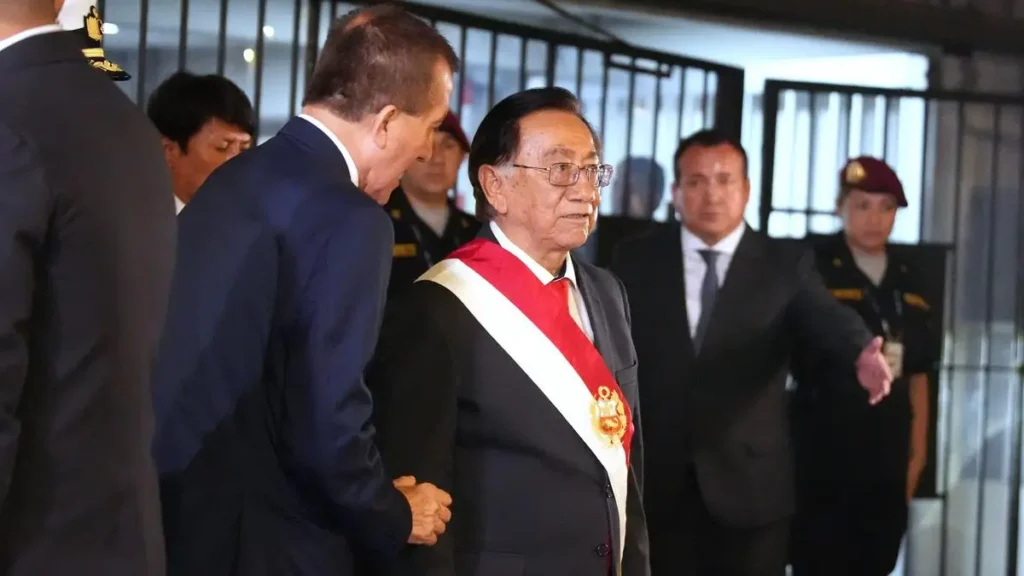
Peru interim president 2026 news update: José María Balcázar elected as eighth leader in a decade amid political instability. Read detailed analysis, FAQs, MCQs, and key takeaways for UPSC, PSC, Banking, Defence and other competitive exams.
Peru Elects José María Balcázar as Interim President — Eighth Leader in a Decade
In a significant development highlighting political instability, Peru’s Congress has elected José María Balcázar as the country’s interim president. This marks the eighth leadership change in the last decade, underscoring an ongoing governance crisis in the South American nation. Balcázar, an 83-year-old seasoned politician and former judge, secured the presidency following the impeachment of his predecessor, José Jerí, who was removed from office amid corruption allegations.
Peru’s Congress voted late on February 18, 2026, to elect Balcázar as interim president, less than a day after ousting José Jerí over undisclosed meetings with business figures that sparked a corruption probe. The legislature’s rapid action reflects the ongoing struggle between Peru’s executive and legislative branches, where impeachment motions and censure votes have become regular features of political life.
Balcázar will serve temporarily until the general elections scheduled for April 12, 2026, a crucial democratic exercise expected to stabilize the national leadership. If no presidential candidate achieves an outright majority, a runoff between top contenders will be held in June. This interim period is critical, as the nation seeks to ensure a transparent electoral process and restore confidence in democratic institutions.
At 83, Balcázar also becomes one of Peru’s oldest heads of state. His career spans decades as a lawyer, judge, and legislator, giving him extensive legal and political experience. His political journey includes membership in the Free Peru party and involvement in multiple parliamentary blocs. His presidency comes at a time when Peru faces challenges ranging from corruption to growing public distrust in governance.

Why This News is Important
Relevance to Political Stability and Governance
The election of José María Balcázar as interim president is a key current affairs topic because it highlights political instability — a frequent theme in global geopolitics. For government exam students, understanding political turnover in countries like Peru helps enhance analytical skills regarding executive- legislative relations, constitutional succession, and impeachment mechanisms. Frequent leadership changes signal weaknesses in democratic processes and institutional checks and balances, important topics in polity and international relations sections of competitive exams.
Impact on Democratic Processes and Elections
This transitional presidency also directly relates to electoral integrity, a core part of democratic practice. Balcázar’s interim role includes overseeing the 2026 general elections, meaning his actions could influence how Peru conducts fair and transparent voting. Such issues are critical for aspirants preparing for civil services, as elections and democracy are high-priority areas in both syllabus and essay components.
Global Political Context
Moreover, the news situates Peru within the broader context of Latin American governance challenges. Frequent changes in leadership due to corruption or political conflict raise important questions about executive accountability, legislature power, and public trust — themes common in governance and international affairs sections of competitive exams.
Historical Context: Political Turmoil in Peru (2016–Present)
Pattern of Frequent Leadership Changes
Peru’s recent political history has been marked by recurring leadership turnover. Since 2016, the country has witnessed eight presidents in less than a decade, a consequence of congressional impeachments, corruption scandals, and institutional gridlock. This trend reflects a deeper constitutional crisis, where the legislature has repeatedly used broad interpretations of impeachment provisions to remove sitting presidents.
Impeachment and Its Effects
The impeachment process has played a central role in this instability. Presidents have been ousted amid allegations ranging from corruption to failure in governance. For example, José Jerí, Balcázar’s immediate predecessor, was removed over undisclosed meetings with business figures — a decision demonstrating how quickly executive authority can change hands in Peru.
Democratic Transitions and Elections
This context highlights the challenges of democratic transition. With general elections set for April 2026, Balcázar’s interim presidency underscores the urgency of restoring political stability and public faith in democratic institutions. Understanding this backdrop is crucial for students studying comparative politics and governance.
Key Takeaways from “Peru Elects José María Balcázar as Interim President”
| S.No | Key Takeaway |
|---|---|
| 1 | José María Balcázar was elected interim president by Peru’s Congress on Feb 18, 2026. |
| 2 | He is the eighth president in a decade, illustrating political instability. |
| 3 | Balcázar succeeded José Jerí, who was removed amid corruption allegations. |
| 4 | His interim tenure will oversee the April 2026 general elections. |
| 5 | At 83, he is one of Peru’s oldest leaders, with a long career in law and politics. |
FAQs – Peru Elects José María Balcázar as Interim President
1. Who is José María Balcázar?
José María Balcázar is a senior Peruvian politician and legal professional who was elected as interim president by Congress. He has served in legislative roles and has a background in law and judiciary affairs.
2. Why was a new interim president elected in Peru?
The interim president was elected after the removal of the previous head of state through constitutional procedures. Peru has witnessed repeated leadership changes due to impeachment motions and political confrontations between the executive and legislative branches.
3. How many presidents has Peru had in the last decade?
Peru has had eight presidents in the last ten years, reflecting ongoing political instability and institutional challenges.
4. What is the role of an interim president in Peru?
An interim president governs temporarily until fresh elections are conducted. The role primarily focuses on maintaining constitutional order, ensuring administrative continuity, and supervising free and fair elections.
5. When are Peru’s next general elections scheduled?
The next general elections are scheduled in 2026. If no candidate secures a majority, a runoff election may be conducted as per constitutional provisions.
6. Why is Peru’s political instability important for competitive exams?
Political instability in Peru is important for exams because it relates to topics such as constitutional provisions, impeachment procedures, executive-legislative conflicts, democracy, and governance — all core areas in UPSC, State PSC, Banking, Defence, and other competitive examinations.
7. What region does Peru belong to?
Peru is located in South America and shares borders with Ecuador, Colombia, Brazil, Bolivia, and Chile. It plays an important role in Latin American geopolitics.
Some Important Current Affairs Links

