
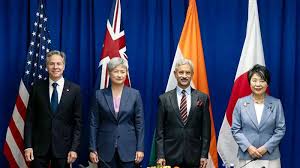
Dr. S. Jaishankar at the Quad Foreign Ministers’ Meeting in Tokyo
Overview of the Meeting
In a significant diplomatic event, Dr. S. Jaishankar, India’s External Affairs Minister, attended the Quad Foreign Ministers’ meeting held in Tokyo. The meeting, which included representatives from the United States, Japan, and Australia, was aimed at strengthening cooperation among the member countries and addressing critical regional and global issues. The Quad, formally known as the Quadrilateral Security Dialogue, is a strategic forum that emphasizes a free and open Indo-Pacific region.
Key Discussions and Outcomes
During the meeting, the Quad members discussed a wide range of issues including maritime security, economic growth, and regional stability. One of the primary focuses was on enhancing joint efforts to address challenges posed by China’s assertive policies in the Indo-Pacific. The ministers also emphasized the importance of upholding international law and norms, particularly concerning the South China Sea and other contested areas.
Dr. Jaishankar underscored India’s commitment to a rules-based international order and highlighted India’s role in contributing to regional stability. The meeting concluded with a renewed commitment to deepening the Quad’s cooperation in areas such as technology, climate change, and infrastructure development.
Strategic Implications
The Tokyo meeting underscored the Quad’s role as a pivotal force in shaping the strategic landscape of the Indo-Pacific. By coordinating their policies and actions, the Quad nations aim to counterbalance China’s growing influence and ensure that the region remains open and inclusive. The collaborative initiatives discussed are expected to have a substantial impact on regional security and economic prosperity.

Why This News is Important
Strategic Relevance
The Quad Foreign Ministers’ meeting in Tokyo is of significant importance due to its implications for regional security and international relations. The meeting reflects a concerted effort by major democracies to address the strategic challenges in the Indo-Pacific region. By reinforcing their collective stance, the Quad countries signal their readiness to counterbalance any attempts to disrupt the regional balance of power.
Impact on International Relations
The discussions held during the meeting have far-reaching consequences for global diplomacy. The Quad’s emphasis on upholding international law and norms, particularly in maritime security, highlights a commitment to maintaining a rules-based order. This stance is crucial for ensuring that global trade routes remain open and secure, which directly impacts international economic stability.
Enhancing Regional Cooperation
The Tokyo meeting also underscores the importance of multilateral cooperation in addressing global challenges. By collaborating on issues such as climate change and technology, the Quad members demonstrate a shared vision for a sustainable and prosperous Indo-Pacific region. This cooperative approach is vital for addressing complex global issues that transcend national borders.
Historical Context:
Origins and Evolution
The Quadrilateral Security Dialogue (Quad) was initially conceived in 2007 by Japan’s then-Prime Minister Shinzo Abe, Australian Prime Minister John Howard, Indian Prime Minister Manmohan Singh, and U.S. Vice President Dick Cheney. The forum aimed to foster security and economic cooperation among the member countries. However, it remained dormant for several years due to varying national priorities.
Reinvigoration of the Quad
In recent years, the Quad has been revitalized in response to increasing geopolitical tensions in the Indo-Pacific region. The 2017 meeting marked a significant turning point, with the member countries reaffirming their commitment to a free and open Indo-Pacific. This renewed focus reflects concerns about China’s growing influence and its impact on regional stability.
Current Focus and Objectives
Today, the Quad focuses on enhancing strategic cooperation, addressing maritime security challenges, and promoting economic development. The members have expanded their agenda to include issues such as cybersecurity, climate change, and infrastructure development. This broad-based approach underscores the Quad’s role in shaping the strategic dynamics of the Indo-Pacific region.
Key Takeaways from the Quad Foreign Ministers’ Meeting
| Serial Number | Key Takeaway |
|---|---|
| 1 | The Quad Foreign Ministers’ meeting in Tokyo emphasized strengthening regional security and cooperation. |
| 2 | The meeting focused on countering China’s assertive policies and ensuring a rules-based international order. |
| 3 | The Quad members committed to enhancing collaboration in areas such as technology, climate change, and infrastructure. |
| 4 | The discussions highlighted the importance of maintaining open and secure global trade routes. |
| 5 | The meeting reflects the Quad’s strategic role in shaping the Indo-Pacific’s geopolitical landscape. |
Important FAQs for Students from this News
1. What is the Quad Foreign Ministers’ meeting?
The Quad Foreign Ministers’ meeting is a diplomatic event where the foreign ministers of the Quad countries (United States, Japan, India, and Australia) gather to discuss strategic issues, regional security, and cooperative initiatives. This forum is essential for strengthening the Quad’s role in the Indo-Pacific region.
2. What are the main objectives of the Quad?
The primary objectives of the Quad include promoting a free and open Indo-Pacific, enhancing regional security, and fostering economic and strategic cooperation among the member countries. The Quad aims to counterbalance China’s growing influence and ensure adherence to international laws and norms.
3. Why was the Tokyo meeting significant?
The Tokyo meeting was significant because it reinforced the Quad’s commitment to addressing regional security challenges and upholding international norms. It also marked a renewed focus on collaborative efforts in areas such as technology, climate change, and infrastructure development.
4. How does the Quad influence global diplomacy?
The Quad influences global diplomacy by promoting a collective stance on major international issues, such as maritime security and regional stability. Its emphasis on a rules-based international order contributes to maintaining open and secure global trade routes and addressing broader geopolitical challenges.
5. What historical events led to the formation of the Quad?
The Quad was initially formed in 2007 by Japan, India, Australia, and the United States. It was revived in recent years due to growing concerns about China’s influence in the Indo-Pacific region. The Quad’s evolution reflects changing geopolitical dynamics and a collective commitment to regional stability.
Some Important Current Affairs Links

