
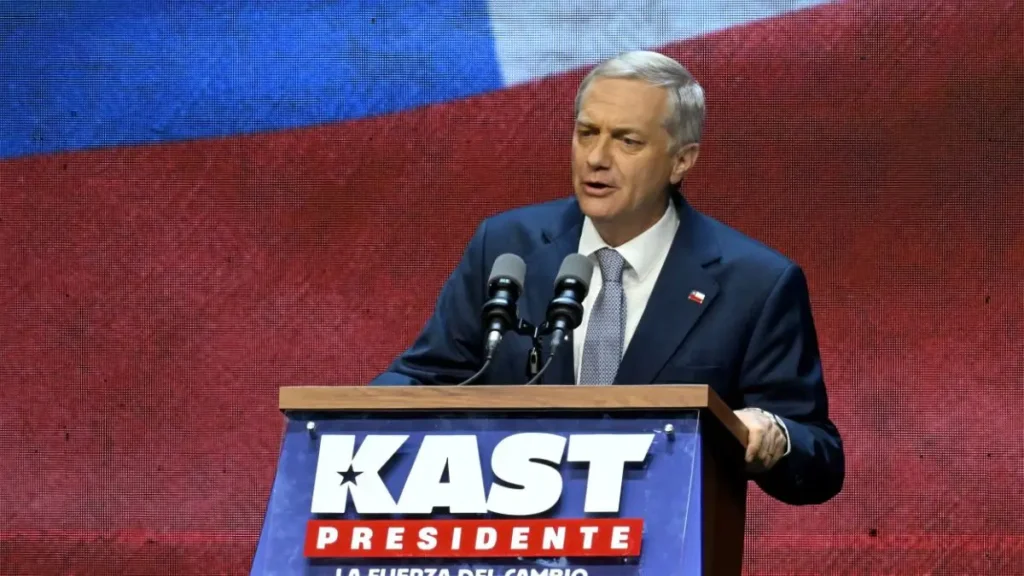
José Antonio Kast Chile President 2025, marking a major right-wing shift. Learn about his policies on crime, immigration, and economic reforms for exams.
José Antonio Kast Becomes Chile’s President: A Major Right-Wing Victory in Latin America
Historic Right-Wing Turn in Chilean Politics
In a pivotal moment for Chilean democracy, José Antonio Kast has been elected as the President of Chile, marking one of the sharpest political shifts in the country’s modern history. Kast, the leader of the Republican Party, secured a decisive victory in the runoff election held on 14 December 2025, winning around 58% of the vote against his left-wing rival Jeannette Jara, who received approximately 42%.
This electoral win represents a significant rightward shift in Chile’s political landscape — the most notable since the end of the military dictatorship under Augusto Pinochet in 1990. Kast’s campaign focused on themes that resonated strongly with a populace concerned about rising crime, immigration challenges, economic stagnation, and public safety.
Voter Concerns and Campaign Themes
Kast’s electoral success was largely driven by his hardline proposals on public safety and immigration control. He pledged to tackle violent crime, strengthen border security, and deport undocumented migrants who fail to comply with the law. His message appealed to voters who feel that the previous left-leaning government struggled to address these challenges effectively.
In addition to law and order, Kast promised economic reforms, including cuts in public spending and measures aimed at boosting private sector confidence and investment. These economic pledges were part of a broader agenda emphasizing small government and fiscal discipline.
Broader Political Implications
Kast’s victory reflects a broader regional trend toward conservative and right-wing leadership in multiple Latin American nations in recent years. Analysts view his win as part of a series of political shifts where voters increasingly prioritize security, economic stability, and anti-immigration policies.
However, Kast will take office without an outright majority in Congress, which means that negotiating policy reforms will require coalition-building and political compromise.
Transition of Power and Future Challenges
Kast is scheduled to be inaugurated on 11 March 2026, officially becoming the next President of Chile. His transition team has already initiated dialogues with outgoing President Gabriel Boric and other political leaders, signaling an attempt at a smooth transfer of power.
Despite his landslide victory, Kast faces substantive challenges, including institutional resistance, polarized public opinion, and the complex task of balancing his ambitious agenda with democratic constraints.

Why This News Is Important for Government Exam Aspirants
Significance in the Global Political Landscape
This election showcases a major shift in Latin American political dynamics — from progressive governance toward conservative leadership — offering a real-world case study of electoral behavior, public policy priorities, and democratic transitions. Such developments are highly relevant for General Studies, International Relations, Political Science, and Current Affairs sections of competitive exams.
Key Themes Relevant to Government Exams
- Democratic Processes: Understanding Chile’s presidential election system — including runoff voting and mandatory participation — helps contextualize electoral mechanics in comparative politics.
- Public Policy Priorities: Kast’s victory underscores how issues like public safety and immigration have become defining concerns, influencing voter preferences globally.
- Regional Trends: The rise of conservative leadership in Latin America mirrors broader geopolitical shifts, making it relevant for sections on international developments.
Aspiring civil servants and aspirants for policing, banking, and administrative services will benefit from understanding the policy implications and the changing global political order reflected in this news event.
Historical Context of the 2025 Chilean Election
Chile’s political history has been shaped significantly by its experiences with dictatorship, democratic restoration, and socioeconomic reforms. After decades of democratic rule following the end of Augusto Pinochet’s military regime in 1990, Chile has traditionally oscillated between center-left and center-right governments.
However, the 2025 election marks a distinct departure toward conservative politics, driven by public demand for stronger governance on law and order, economic restructuring, and tighter immigration control. Kast’s persistent presidential bids — following previous losses in 2017 and 2021 — culminated in this landmark win, signaling a transformative moment in Chilean governance.
Historically, Chile’s political identity has been influenced by deep-rooted social movements, economic reforms, and constitutional debates, all converging in the 2025 election to create a watershed outcome that future generations of leaders and voters will study extensively.
Key Takeaways from Chile Elects José Antonio Kast as President
| S. No. | Key Takeaway |
|---|---|
| 1. | José Antonio Kast won the 2025 Chilean presidential election with about 58% of the vote. |
| 2. | Kast’s victory represents Chile’s most right-wing government since the Pinochet era. |
| 3. | His campaign focused on anti-crime, strict immigration control, and economic reform. |
| 4. | He will take office on 11 March 2026, succeeding outgoing President Gabriel Boric. |
| 5. | The election demonstrates a broader rightward political trend in Latin America. |
FAQs: Frequently Asked Questions
1. Who is José Antonio Kast?
José Antonio Kast is a right-wing politician and leader of the Republican Party in Chile. He has run for the presidency multiple times and won the 2025 election, marking a significant political shift in Chile.
2. When was José Antonio Kast elected as Chile’s President?
He was elected in the runoff election held on 14 December 2025.
3. What percentage of votes did José Antonio Kast secure in the 2025 election?
Kast secured approximately 58% of the votes, defeating his left-wing rival Jeannette Jara.
4. When will José Antonio Kast assume office as President of Chile?
He is scheduled to be inaugurated on 11 March 2026.
5. What were the key issues in Kast’s campaign?
His campaign focused on public safety, crime reduction, stricter immigration control, and economic reforms to boost private sector investment.
6. Why is Kast’s election significant in Chilean history?
It marks the most right-wing government since the Pinochet era, reflecting a major political shift in the country.
7. How does Kast’s election impact Latin American politics?
It highlights a broader regional trend toward conservative and right-wing governance in Latin America.
8. Will Kast have a majority in Congress?
No, Kast will assume office without an outright majority in Congress, requiring coalition-building for his policies.
9. Who did José Antonio Kast defeat in the runoff election?
He defeated Jeannette Jara, the left-wing candidate, in the 2025 presidential runoff.
10. What lessons can government exam aspirants learn from this news?
Aspirants can study electoral processes, public policy priorities, democratic transitions, and global political trends relevant for civil services, banking, railways, and defense exams.
Some Important Current Affairs Links

