
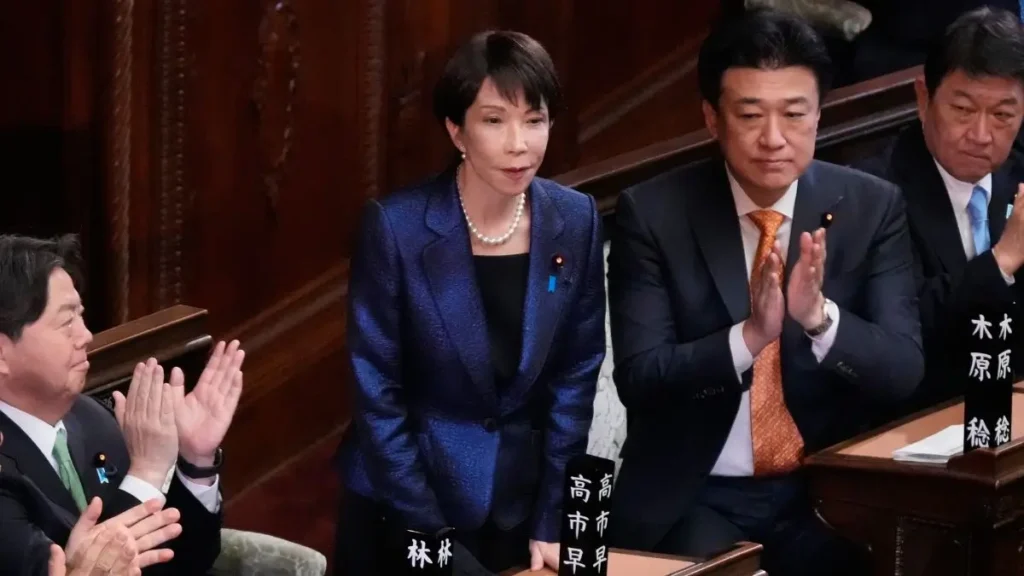
Japan PM Sanae Takaichi reappointed after historic landslide victory 2026 – detailed analysis for UPSC, PSC, Banking, Defence and SSC exams covering political impact, Indo-Pacific strategy, and economic reforms.
Japan Reappoints Sanae Takaichi as Prime Minister After Historic Landslide Victory
Historic Electoral Victory in Japan
Japan’s political landscape witnessed a groundbreaking event on February 18, 2026, when Sanae Takaichi was formally reappointed as Prime Minister of Japan following her historic landslide victory in the general election held on February 8, 2026. This landslide saw her Liberal Democratic Party (LDP) secure a supermajority—more than two-thirds of seats—in the Lower House of Parliament.
This decisive mandate from voters empowers her to push forward policy reforms more assertively than any government in recent Japanese history, giving the ruling party significant control over legislative and constitutional processes.
Strong Political Mandate Enables Reform Agenda
With unprecedented parliamentary strength, Prime Minister Takaichi’s government is set to focus on several major areas. One of her primary objectives is bolstering Japan’s national security and defense framework, particularly in response to regional concerns involving China, Russia, and North Korea. Analysts note that her policy address underscores a more assertive defense posture, relaxation of long-standing restrictions on military exports, and a ramp-up in intelligence capabilities.
Her economic agenda simultaneously marks a shift from traditional fiscal austerity to proactive economic policies, including boosting investments in key high-growth sectors such as artificial intelligence, semiconductors, and shipbuilding. This represents a major strategic shift, aiming to strengthen Japan’s long-term global competitiveness.
Domestic Priorities: Inflation & Household Support
Amid these reforms, Japan has also witnessed a decline in inflation — easing pressure on households following decades of price stagnation. Core inflation rates have moderated in recent months, providing political stability and public support for Takaichi’s leadership.
Moreover, her government has pledged to suspend certain consumption taxes temporarily and prioritize economic relief to improve consumer confidence. These steps are aimed at balancing growth while maintaining fiscal sustainability.
Foreign Policy and Global Diplomacy
On the foreign front, Prime Minister Takaichi aims to further strengthen Japan’s strategic ties, especially with nations like the United States and India. She has discussed future cooperation on secure supply chains, rare earth development, and technology partnerships — emphasizing shared economic and security interests.
Her leadership also plays a vital role in shaping the Free and Open Indo-Pacific (FOIP) strategy, ensuring a balance of power and stability in the broader Asia-Pacific region.

Why This News Is Important for Exam Aspirants
1. Major Political Development in Global Affairs
The reappointment of Sanae Takaichi as Prime Minister of Japan is a significant development in global politics. Japan is one of the world’s largest economies and a key U.S. ally in the Asia-Pacific region. This election outcome reflects shifts in political ideology and governance in a major democratic nation.
2. Strategic Impact on Indo-Pacific Stability
With tensions rising over territorial and security issues in the region, especially involving China and North Korea, Takaichi’s strong mandate gives Japan the ability to expand defense capabilities and influence regional security policy. Exam topics covering geopolitics, defense strategies, and Indo-Pacific relations will find this particularly relevant.
3. Economic Policy Reorientation
Takaichi’s shift away from strict fiscal austerity towards pro-growth and investment-oriented economic policies is a significant shift in Japan’s economic strategy. This holds relevance for questions related to global economic reforms, inflation control, and fiscal policy, commonly tested in banking and civil service exams.
4. Japan’s Domestic Governance
Her supermajority gives the government the power to amend laws and possibly influence constitutional reform debates, a key topic under governance and public administration sections in competitive exams.
5. Foreign Policy with Strategic Partners
Her emphasis on cooperation with allies such as the U.S. and India feeds directly into syllabi covering international relations and strategic partnerships.
Historical Context: Background on Sanae Takaichi & Japan’s Political Landscape
Japan’s Parliamentary System
Japan’s government structure follows a parliamentary democracy where the Prime Minister is elected by the members of the National Diet — the Lower and Upper Houses. The ruling party’s influence depends on its seat share in the Lower House. Historical trends show that a two-thirds majority is exceptionally rare and gives extensive legislative powers.
Rise of Sanae Takaichi
Sanae Takaichi made history in October 2025 by becoming Japan’s first female prime minister, after winning the Liberal Democratic Party presidency. Her political ideology is often described as conservative and nationalist, with strong views on security and social policy.
Context of Snap Election
Due to internal party dynamics and rising geopolitical concerns, a snap general election was called in February 2026 — resulting in a landslide victory for the LDP under Takaichi, marking one of the most decisive electoral wins in Japan’s post-war era.
Regional Security and Historical Tensions
Japan’s security posture has evolved significantly post-World War II, especially in response to North Korea’s missile capabilities and China’s expanding military presence in the region. Takaichi’s policies reflect this shift towards a more assertive defense policy.
Key Takeaways from Japan’s Reappointment of Sanae Takaichi
| S. No. | Key Takeaway |
|---|---|
| 1 | Sanae Takaichi was reappointed as Prime Minister of Japan on Feb 18, 2026, after a historic landslide victory in the general election. |
| 2 | The ruling Liberal Democratic Party secured a supermajority in the Lower House, giving it strong legislative power. |
| 3 | Takaichi’s agenda emphasizes defense and security reforms in response to regional tensions. |
| 4 | Economic policy shifts include proactive investment and fiscal reforms. |
| 5 | Japan aims to strengthen strategic partnerships with countries like the United States and India. |
FAQs: Frequently Asked Questions
1. Who has been reappointed as the Prime Minister of Japan in 2026?
Sanae Takaichi has been reappointed as the Prime Minister of Japan after securing a historic landslide victory in the general elections.
2. Which political party does Sanae Takaichi belong to?
She is a senior leader of the Liberal Democratic Party (LDP), which has dominated Japanese politics for decades.
3. What is meant by a landslide victory in parliamentary elections?
A landslide victory refers to a situation where a political party wins an overwhelming majority of seats, often crossing the two-thirds majority mark, enabling easier passage of laws and constitutional amendments.
4. Why is this election significant for global politics?
Japan is the world’s third-largest economy and a key strategic player in the Indo-Pacific region. Leadership changes in Japan directly influence global security, trade, and diplomatic alignments.
5. What are the major policy priorities of the new government?
The government is focusing on national security reforms, economic revitalization, inflation management, and strengthening strategic ties with allies such as the United States and India.
6. How is Japan’s Prime Minister elected?
The Prime Minister is elected by members of the National Diet (Japan’s Parliament). The leader of the majority party in the Lower House generally becomes the Prime Minister.
7. Why is this news important for competitive exams?
It is relevant for sections on International Relations, World Politics, Indo-Pacific Strategy, Economic Policies, and Governance in exams like UPSC, State PSCs, Banking, Defence, and SSC.
8. What is Japan’s parliamentary system called?
Japan follows a constitutional monarchy with a parliamentary government system.
Some Important Current Affairs Links

