
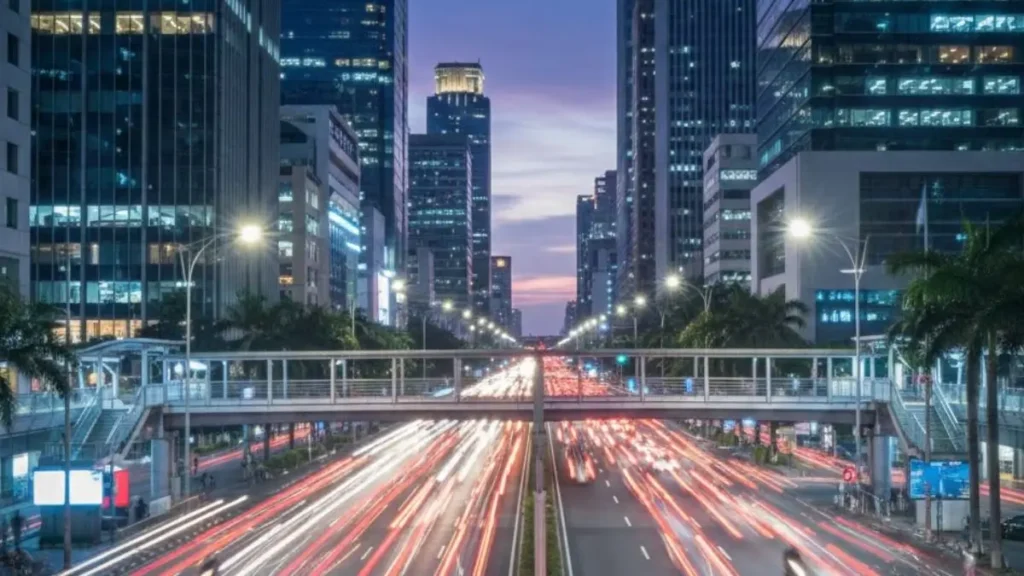
Jakarta world most populous city 2025: UN report reveals Jakarta surpasses Tokyo as largest city globally. Learn key facts, megacity population trends, and urbanization insights for exams.
Jakarta Becomes World’s Most Populous City — UN Declares Historic Change
Jakarta Overtakes Tokyo as Global Population Leader
According to the latest United Nations Department of Economic and Social Affairs (UN DESA) report titled World Urbanization Prospects 2025, Jakarta has officially become the world’s most populous city in 2025. The Indonesian capital now hosts nearly 42 million residents, surpassing Tokyo — which long held the top spot.
New Methodology Behind the Shift
The major change stems from the UN’s revised methodology for measuring urban populations. Rather than relying solely on national urban definitions, the 2025 report uses a harmonized geospatial criterion: contiguous settlement areas with a population density threshold and minimum population size. This more standardized approach redefines the boundaries of “urban areas,” capturing continuous metropolitan sprawl around cities like Jakarta.
The Extent of Jakarta’s Megacity Status
Under these new definitions, the greater Jakarta urban region — including previously uncounted suburbs and satellite towns — accounts for about 41.9 million to 42 million people. This expansion pushes Jakarta ahead of not just Tokyo, but also Dhaka (Bangladesh), which now ranks second globally.
Urbanization — A Defining Trend of 21st Century
The UN report underscores that as of 2025, about 45% of the world’s 8.2 billion people live in cities — a dramatic increase from only 20% in 1950. The number of “megacities” (urban areas with 10 million+ inhabitants) has surged from 8 in 1975 to 33 today, with more than half located in Asia.
Implications of the Population Shift
This demographic upheaval carries far-reaching implications. Rapid urban growth places enormous pressure on infrastructure, housing, public services, environment, and governance. For Jakarta — and other emerging megacities — the challenge will be managing resources sustainably, ensuring equitable growth, and maintaining quality of life despite mass influx.

Why This News is Important
The announcement that Jakarta has overtaken Tokyo to become the world’s most populous city is more than a statistical update — it reflects the sweeping transformation of global population patterns and urban living. For students preparing for government exams (civil services, banking, railways, police, etc.), this event underlines key themes often examined: demographic change, urbanization, sustainable development, and global socio-economic shifts.
Firstly, it highlights how cities — especially in Asia — are becoming dominant centres of human population, economic activity, and governance challenges. With 45% of the global population now urbanized, understanding megacity dynamics becomes essential for comprehending state policy, infrastructure planning, climate resilience, and migration trends.
Secondly, the shift underscores how methodology and data definitions by international bodies like the UN can reshape global rankings and perceptions. Such changes often trigger revised policymaking, international cooperation, and long-term planning — topics that are relevant for governance and public administration exams.
Lastly, for aspirants of civil services and administrative roles, the news serves as a real-world example of urban management issues: from population density, civic infrastructure to sustainable growth — all of which are central to public policy, urban planning, environment, and governance discussions.
Historical Context
- Historically, Tokyo reigned as the world’s largest city for decades, often topping global rankings of urban population. The dominance of Tokyo was based on national metropolitan definitions, rather than a standardized international methodology.
- Over the past half-century, global urbanization has surged. In 1950, only about one in five people lived in cities; by 2025, that number has more than doubled.
- The number of megacities (with pop. over 10 million) has increased drastically — from 8 in 1975 to 33 in 2025 — indicating rapid urban expansion worldwide, especially across Asia.
- The updated approach adopted by UN DESA in 2025 abandons national inconsistencies, using geospatial criteria — contiguous urban agglomerations with defined population and density thresholds — for fair global comparisons. This methodology revision is what prompted the reordering of city rankings, elevating Jakarta.
Key Takeaways from This News
| # | Key Takeaway |
|---|---|
| 1 | Jakarta is now the world’s most populous city (≈ 42 million), overtaking Tokyo. |
| 2 | The shift results from the UN’s new standardized geospatial methodology used in World Urbanization Prospects 2025. |
| 3 | Dhaka (Bangladesh) now ranks second globally, and Tokyo has moved to third with around 33–33.4 million people |
| 4 | As of 2025, about 45% of the world’s 8.2 billion population lives in cities — up from 20% in 1950. |
| 5 | The number of global megacities (10 million+ inhabitants) has surged from 8 in 1975 to 33 in 2025; many are in Asia. |
FAQs: Frequently Asked Questions
1. Which city has become the world’s most populous city in 2025?
Jakarta, the capital of Indonesia, has become the world’s most populous city with around 42 million residents, surpassing Tokyo.
2. Why did Jakarta overtake Tokyo in population rankings?
The United Nations revised its methodology to measure urban populations using geospatial criteria and contiguous urban areas, which expanded Jakarta’s counted population.
3. How many people currently live in Tokyo and Dhaka?
As of 2025, Tokyo has around 33–33.4 million residents, and Dhaka ranks second with slightly fewer people than Jakarta.
4. What is the significance of urbanization trends globally?
Urbanization reflects socio-economic development, infrastructure challenges, and governance issues. Currently, 45% of the global population lives in cities compared to 20% in 1950.
5. How many megacities exist in 2025, and where are most located?
There are 33 megacities worldwide (population 10 million+), and more than half are located in Asia.
6. What methodology did the UN use to update urban population rankings?
UN DESA used a standardized geospatial criterion, measuring contiguous settlement areas with minimum population density and size.
7. Why is this news important for students preparing for government exams?
It highlights urbanization, demographic trends, global population shifts, and infrastructure challenges — key topics for exams like UPSC, state PSCs, banking, railways, and civil services.
8. What are the implications of Jakarta’s population growth?
Rapid urban growth poses challenges for housing, infrastructure, resource management, environmental sustainability, and governance.
9. What is the historical context of Tokyo’s population?
Tokyo was the world’s most populous city for decades, but the revised methodology in 2025 changed the rankings, placing Jakarta first.
10. Which continents have most of the world’s megacities?
Asia leads in megacities, followed by Africa, North America, and Europe, reflecting rapid urbanization trends in developing regions.
Some Important Current Affairs Links

