
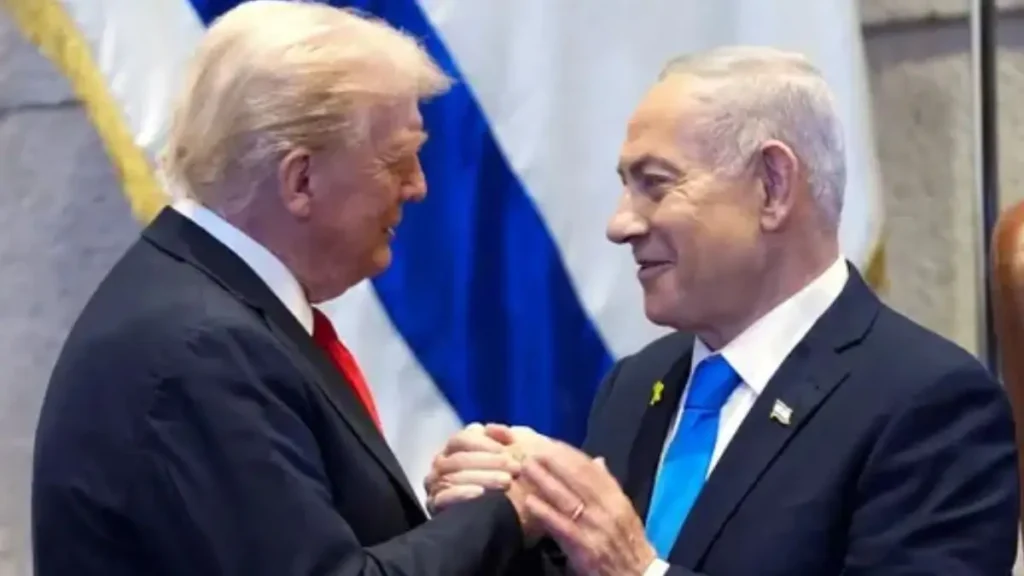
Israel Gaza peace board news: Israel joins Trump’s Board of Peace to oversee Gaza ceasefire and reconstruction, shaping Middle East diplomacy and international relations.
Israel Joins Trump’s “Board of Peace” to Oversee Gaza Ceasefire Plan – Explained for Competitive Exam Aspirants
Introduction: A New Chapter in the Gaza Peace Process
In a major development in Middle East diplomacy, Israel has agreed to join U.S. President Donald Trump’s “Board of Peace,” an international initiative aimed at supervising the Gaza ceasefire plan and shaping the region’s post‑conflict future. This move marks a significant diplomatic shift by Israeli Prime Minister Benjamin Netanyahu, who earlier raised concerns about parts of the peace framework.
The Board of Peace was launched by President Trump as part of a broader 20‑point plan to end the long‑running Gaza conflict and guide reconstruction efforts in the territory following a ceasefire agreement between Israel and Hamas. This initiative, which has drawn global attention, seeks to build a framework for peace while posing new diplomatic and geopolitical questions in international relations.
What Is Trump’s Board of Peace?
The Board of Peace is an international body proposed by the United States to oversee the implementation of the Gaza ceasefire and contribute to peacebuilding in the war‑torn region. Initially intended as a small group of world leaders focused on Gaza, its role has expanded, with invitations extended to numerous countries and the potential to act as a global conflict‑mediation platform, even drawing comparisons to a rival to the United Nations.
Chairing the Board is President Donald Trump, and the member list includes various nations from different regions. Israel’s decision to participate aligns it formally with global actors engaged in the peace process and reconstruction dialogue.
Israel’s Changing Stance
Israeli Prime Minister Benjamin Netanyahu’s acceptance of the invitation signals a diplomatic shift following initial disagreements. Earlier, Israel had criticized aspects of the peace framework, particularly concerning the composition of the executive bodies responsible for Gaza’s administration. Despite these objections, Israel’s participation underscores its recognition of the need for international engagement in stabilizing the region and supporting the ceasefire.
The participation of Israel — a central party in the conflict — also reflects the complex geopolitical negotiations shaping the region’s future peace architecture.
Global Reactions and Participation
Support and responses to the Board of Peace vary globally. More than 20 countries have confirmed participation, including nations from the Middle East, Asia, Africa, and Eastern Europe. Meanwhile, several Western allies have declined or remain undecided about joining, reflecting differing views on the initiative’s legitimacy and potential implications for existing international institutions like the U.N.
The varied international response highlights the complexity of diplomatic efforts to resolve the Gaza conflict and the challenges of building consensus around transitional governance and peacebuilding strategies.
Strategic Importance for the Region
Israel’s inclusion in this board — initially proposed to oversee a ceasefire plan — may provide Jerusalem with greater diplomatic leverage and a direct voice in shaping Gaza’s reconstruction and governance framework. For the broader peace process, it emphasizes the role of multilateral engagement in addressing long‑standing conflicts and balancing regional interests.

Why This News Is Important (For Government Exams)
Relevance to Current Affairs Syllabi
For aspirants preparing for teacher, police, banking, railways, defence, civil services (like PSCs and IAS), and other government exams, understanding this development is crucial because it reflects ongoing global diplomatic efforts to resolve one of the longest‑running international conflicts — the Israel‑Gaza situation.
These exams frequently include topics on international relations, peace processes, conflict resolution, and global governance mechanisms. The Board of Peace represents an unconventional diplomatic approach that diverges from traditional frameworks such as U.N. peacekeeping, making it a notable topic for current affairs.
Impact on Geopolitics and Policy
The news reflects Israel’s shifting diplomatic strategy, with Prime Minister Benjamin Netanyahu agreeing to join an international body initiated by the United States — a key ally. This shift has implications for Middle East geopolitics, alliance dynamics, and peace negotiations, offering students insight into how nations manage complex regional tensions.
Understanding this development also helps candidates appreciate how international diplomacy, peace processes, and geopolitical interests converge, which is relevant not only for static syllabus topics but also for essay writing, interviews, and analytical sections of exams.
Broader Implications
The Board of Peace illustrates how peace initiatives can extend beyond traditional UN mechanisms and involve diverse international actors. It also raises questions about global governance, sovereignty, and the role of major powers in conflict resolution — themes frequently explored in competitive exams under international relations and world politics sections.
Historical Context: Background to the Board of Peace and the Gaza Conflict
Long‑Standing Israel–Gaza Conflict
The Israel‑Gaza conflict stems from decades of tensions between Israel and Palestinian groups, including Hamas — a militant organization governing the Gaza Strip. Major escalations occurred periodically, with the October 7, 2023 Hamas attack on southern Israel triggering a prolonged and devastating conflict.
Ceasefire and Peace Efforts
After intense conflict, a ceasefire agreement was reached in late 2025 under a U.S.‑brokered peace plan. The plan outlined a three‑phase process to end hostilities, withdraw forces, release hostages, and set the stage for reconstruction and demilitarization.
The Board of Peace is part of this broader peace initiative, conceived to oversee the implementation of the ceasefire and assist in building governance structures for Gaza. This approach differs from traditional UN peace initiatives by involving a board chaired by a global leader (Trump), aimed at directing reconstruction and long‑term stability mechanisms.
International Diplomatic Dynamics
International involvement in the peace process reflects global geopolitical interests. Regional powers and Western nations have taken varying stances on the initiative — with some endorsing it and others expressing reservations about its impact on established institutions like the United Nations.
The Board of Peace effort fits into a long history of international attempts to mediate peace in the Middle East, from U.N. resolutions to diplomatic summits like the 2025 Sharm El‑Sheikh Peace Summit, highlighting evolving peace strategies.
Key Takeaways from “Israel Joins Trump’s Board of Peace to Oversee Gaza Ceasefire Plan”
| Sr. No. | Key Takeaway |
|---|---|
| 1 | Israel has agreed to join U.S. President Trump’s “Board of Peace” to oversee Gaza peace efforts and the ceasefire implementation. |
| 2 | The Board of Peace is a new international body aimed at supervising the Gaza ceasefire and post‑conflict reconstruction. |
| 3 | Prime Minister Benjamin Netanyahu’s participation marks a diplomatic shift after earlier objections to peace framework elements. |
| 4 | Over 20 countries have confirmed participation in the Board, while several Western allies remain undecided or have declined. |
| 5 | The initiative represents a significant diplomatic effort in global peace processes, relevant for exams on international relations and current affairs. |
FAQs: Frequently Asked Questions
1. What is Trump’s Board of Peace?
The Board of Peace is an international initiative launched by U.S. President Donald Trump to oversee the implementation of the Gaza ceasefire and facilitate peacebuilding and reconstruction in the region.
2. Why did Israel initially oppose the peace framework?
Israel, under Prime Minister Benjamin Netanyahu, raised concerns over the composition and authority of executive bodies responsible for Gaza governance, which delayed its participation initially.
3. How many countries are part of the Board of Peace?
Currently, over 20 countries have confirmed participation, while several Western allies are undecided or have declined.
4. What is the main objective of the Board of Peace?
The board aims to ensure the ceasefire holds, oversee Gaza’s reconstruction, and provide guidance for long-term stability and governance, outside traditional U.N. mechanisms.
5. How does this news impact international relations?
Israel’s inclusion signifies a major diplomatic shift and highlights how multilateral diplomacy and major powers like the U.S. are shaping conflict resolution in the Middle East.
6. Why is this important for government exam aspirants?
Questions on international diplomacy, peace processes, and Middle East geopolitics are commonly asked in competitive exams like IAS, PSCs, banking, defence, and railway exams.
7. When was the Gaza ceasefire reached?
A U.S.-brokered ceasefire agreement was reached in late 2025, ending the major escalation that followed the Hamas attack on Israel in October 2023.
8. Who chairs the Board of Peace?
The Board is chaired by President Donald Trump, with participation from countries around the world including Israel.
Some Important Current Affairs Links

