
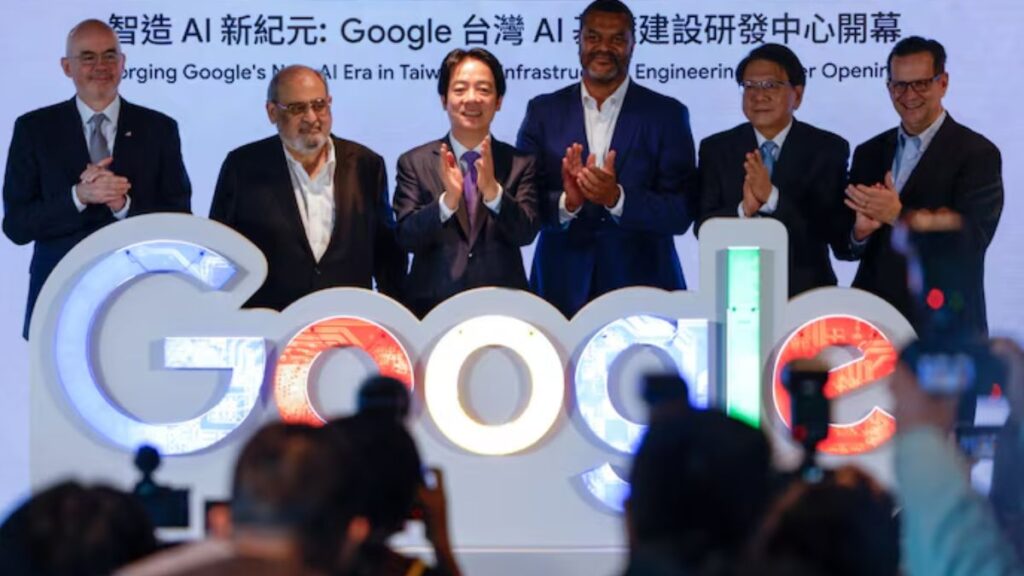
Google AI engineering centre Taiwan: Google opens its largest AI hardware hub outside the U.S. in Taipei, focusing on TPUs, AI infrastructure, and global cloud services.
Google Opens Major AI Hardware Engineering Centre in Taiwan
In a significant strategic development, Google has inaugurated its largest AI infrastructure hardware engineering centre outside the United States, situated in Taipei, Taiwan. This move underscores Google’s deepening commitment to AI development, particularly in hardware, and highlights Taiwan’s growing stature as a global innovation hub.
Focus on AI Hardware and TPU Integration
The new centre is dedicated to integrating Google’s proprietary Tensor Processing Units (TPUs) — specialized AI chips — into server boards and data‑centre hardware. Engineers at this facility will design, test, and refine AI‑specific hardware architecture to support Google’s cloud computing and machine learning operations globally.
Scale and Workforce Expansion
Google expects to employ several hundred engineers at this new hub. The establishment marks a tripling in the size of its Taiwan-based infrastructure engineering team since 2020. This centre adds to Google’s existing presence in Taiwan, which already includes:
- A data centre operating since 2013
- Two hardware hubs focused on consumer electronics
- Investments in undersea communication cables to strengthen global connectivity
Strategic Significance: Tech & Geopolitics
The timing of this investment is strategic. Taiwan is widely regarded as a trusted partner in the global semiconductor ecosystem, especially due to its role in chip manufacturing through TSMC, the world-leading contract chipmaker. At the opening ceremony, Taiwan’s President Lai Ching‑te called the investment a signal of global confidence in Taiwan’s technological reliability.
From the U.S. perspective, Raymond Greene, the head of the American Institute in Taiwan (effectively the U.S. embassy), described the centre’s inauguration as ushering in “a new golden age” of U.S.–Taiwan economic relations. The investment reinforces not just commercial collaboration but also technology sovereignty and secure AI development outside adversarial power blocs.
Global Impact of the Hub
Google’s Taipei centre will develop hardware that supports its global infrastructure. According to Google, systems designed there will be deployed in its data centres worldwide to power services ranging from YouTube and Search to advanced AI initiatives like its Gemini models. The facility is more than just an R&D lab — it is positioned as a keystone for a broader AI ecosystem that combines design, testing, and global deployment.
Security & Trust: Taiwan’s Role
Taiwan’s democratic governance and stable business environment make it a compelling location for such critical infrastructure. Leaders in Taiwan have expressed security concerns about relying on AI systems developed by authoritarian states, particularly warning against Chinese AI platforms like DeepSeek. By contrast, Google’s investment is being framed as a step toward secure, trustworthy AI.

Why This News Is Important
Strategic Alliance in Technology
Google’s new engineering centre signals a significant strengthening of the U.S.–Taiwan tech partnership. By placing its largest hardware AI hub outside the U.S. in Taiwan, Google is recognizing the island’s critical role in the global semiconductor supply chain. This aligns closely with U.S. strategic interest in ensuring robust, secure AI infrastructure beyond adversarial geographies.
Boost for Taiwan’s Global Tech Leadership
For Taiwan, hosting this facility reinforces its reputation as a global innovation centre. With world-leading firms like Google choosing to invest deeply in its talent and infrastructure, Taiwan’s position in AI and semiconductor ecosystems becomes even more central. This could lead to enhanced investments, talent inflow, and strengthened geopolitical leverage.
Implications for AI and Cloud Services
The centre’s work on integrating TPUs into server boards and developing reliable, large-scale AI hardware will directly impact Google Cloud’s performance and reliability. For students preparing for government exams, this news highlights how technological infrastructure is evolving, which may feature in questions on global tech trends, supply chains, and international relations.
Geopolitical Secure AI Ecosystem
In light of increasing concerns about AI security, particularly regarding dependencies on Chinese technology, the centre reinforces a trusted and secure AI development pathway. It also reflects how democracies are investing in critical technologies to mitigate geopolitical risks associated with AI supply chains.
Historical Context
Google’s Presence in Taiwan
Google has had a strong presence in Taiwan for years. Its first data centre in Asia Pacific was established on the island in 2013. Over time, Google has expanded R&D operations in Taiwan, especially in hardware. In 2024, Google opened a second building in its TPark campus in New Taipei City, marking a further expansion of its hardware engineering operations.
Taiwan’s Semiconductor Significance
Taiwan is home to TSMC (Taiwan Semiconductor Manufacturing Company), the world’s largest contract chipmaker. TSMC manufactures advanced semiconductors for a wide range of global companies, including those building AI accelerators like NVIDIA and Google’s TPUs. This makes Taiwan a linchpin in the global supply chain for AI hardware.
Geopolitical Tech Tensions
Tech investments in Taiwan have broader geopolitical implications. Given the complex cross-strait relationship with China, and rising U.S.–China competition in technology, Taiwan’s role as a stable, trustworthy base for critical infrastructure is increasingly valued. Google’s investment not only boosts its AI capabilities but also signals support for a secure and democratically aligned technological partner.
Key Takeaways from This News
| S. No. | Key Takeaway |
|---|---|
| 1. | Google has opened its largest AI hardware engineering centre outside the U.S. in Taipei, Taiwan. |
| 2. | The centre will focus on TPU (Tensor Processing Unit) integration into servers and AI-specific hardware. |
| 3. | Several hundred engineers will work there, tripling Google’s Taiwan infrastructure team since 2020. |
| 4. | The move bolsters the U.S.–Taiwan tech alliance, with geopolitical importance amid global AI competition. |
| 5. | Taiwan’s role as a secure and trusted AI infrastructure hub is being reinforced, given its democratic governance and leadership in semiconductors. |
FAQs: Frequently Asked Questions
1. What is the new Google AI hardware engineering centre in Taiwan?
Google’s latest AI hardware engineering centre in Taipei is the largest outside the U.S., focused on designing and integrating Tensor Processing Units (TPUs) into servers and data-centre hardware.
2. Why did Google choose Taiwan for this AI centre?
Taiwan is a global leader in semiconductor manufacturing and offers a stable, democratic environment, making it ideal for secure AI infrastructure development.
3. How many engineers will work at the new centre?
The centre is expected to employ several hundred engineers, tripling Google’s Taiwan-based infrastructure engineering team since 2020.
4. What is the significance of TPUs in Google’s AI ecosystem?
TPUs (Tensor Processing Units) are specialized chips designed to accelerate machine learning and AI workloads, powering Google Cloud, Search, YouTube, and AI models like Gemini.
5. How does this investment affect U.S.–Taiwan relations?
It strengthens the U.S.–Taiwan tech partnership, signaling support for Taiwan as a reliable AI and semiconductor hub while enhancing secure AI infrastructure outside adversarial regions.
6. Will the hardware developed in Taiwan be used globally?
Yes, systems designed in Taiwan will support Google’s data centres worldwide, improving cloud performance and AI infrastructure globally.
7. What is the broader geopolitical significance of this centre?
The centre reduces reliance on AI hardware from potentially adversarial countries, ensuring a secure and trusted supply chain for critical AI technologies.
Some Important Current Affairs Links

