
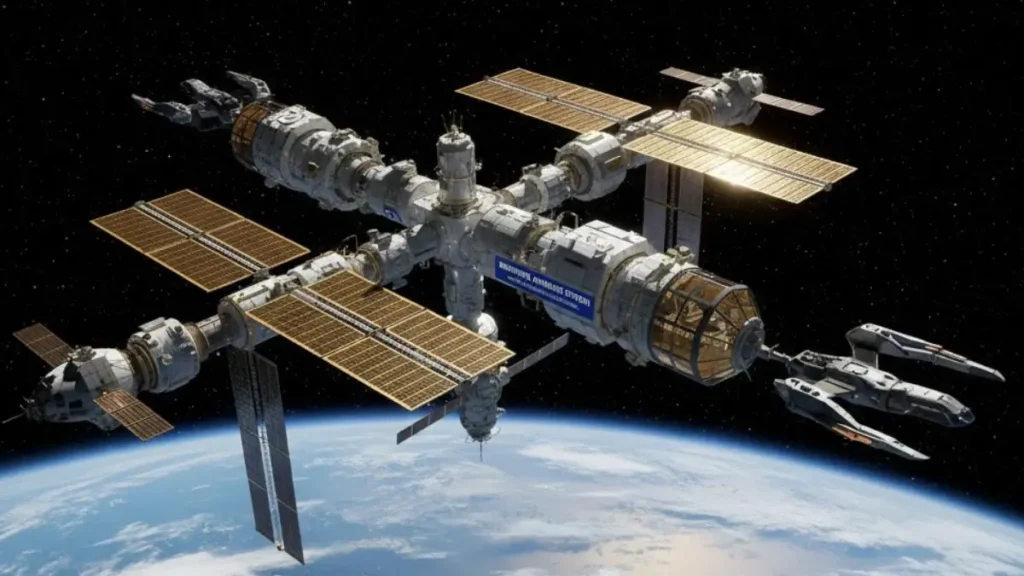
First private space station Haven-1 is set to launch in 2027 aboard SpaceX Falcon 9. This marks a historic transition from government-led to commercial space operations.
Historic Transition in Space: First Private Station Scheduled for 2027
World’s First Private Space Station: A New Era in Orbit
The space sector is entering a historic transformation as the world’s first private space station, Haven-1, developed by Vast Space, is scheduled for launch in 2027. This compact commercial orbital outpost represents a significant shift from government-led space operations to private sector management in low Earth orbit (LEO). With the International Space Station (ISS) approaching retirement around 2030, Haven-1 is poised to become humanity’s first privately operated foothold in space, opening new avenues for commercial research, tourism, and innovation.
Compact Design and Single-Launch Approach
Unlike the massive, multi-module ISS, Haven-1 has been intentionally designed as a compact, single-launch orbital station. Vast Space plans to deploy the station in one piece using the SpaceX Falcon 9 rocket, avoiding the complexities and high costs of multi-launch assembly missions. Originally planned for 2026, the launch timeline has been slightly revised to early 2027. According to Vast Space CEO Max Haot, the schedule is stable, with construction and testing progressing steadily. Experts highlight that Haven-1’s reliance on proven flight technology rather than experimental systems allows for rapid development and higher reliability.
SpaceX Partnership: The Key to Success
A crucial factor in Haven-1’s development is Vast Space’s partnership with SpaceX. The station will rely on the Crew Dragon capsule for life-support functions, electrical power, oxygen supply, and crew transportation. Crew Dragon has an established track record with multiple successful missions to the ISS, making it a dependable spacecraft for human-rated operations. By leveraging SpaceX’s proven infrastructure, Vast Space significantly reduces both development risk and timeline, accelerating the station from concept to near-flight readiness in less than four years.
NASA’s Strategic Role in the Private Space Era
Although Haven-1 is privately built, NASA remains an essential partner in its development. Vast Space has completed primary structural assembly and will conduct comprehensive testing with NASA to meet safety and operational standards. NASA intends to purchase services from private stations rather than own or operate them, allowing the agency to focus resources on deep-space missions, including Moon and Mars exploration. This approach marks a strategic pivot, shifting low Earth orbit operations to private enterprises while maintaining governmental oversight for safety and functionality.

Why This News is Important
Marking a Shift to Commercial Space Operations
Haven-1 signals a paradigm shift in space exploration. For decades, human activity in low Earth orbit has been dominated by government-funded projects like the ISS. With private companies now entering the field, the landscape of space operations is evolving to a commercially driven model, promoting innovation, reducing costs, and increasing accessibility for research, industry, and tourism.
Implications for Government Agencies and Space Policy
Government agencies like NASA are transitioning from operators to service customers, buying services from private entities rather than managing low Earth orbit platforms themselves. This enables public institutions to focus on deep-space exploration missions, such as lunar bases and Mars expeditions, while private companies handle LEO operations efficiently.
Opportunities for Students and Future Careers
The emergence of private space stations like Haven-1 is also significant for future employment and research opportunities. STEM students, aerospace engineers, and policy professionals can now anticipate new career pathways in commercial spaceflight, orbital research, and international collaboration between private firms and governments.
Historical Context
Evolution of Low Earth Orbit Operations
Since its launch in 1998, the International Space Station (ISS) has served as humanity’s permanent laboratory in low Earth orbit. For more than two decades, space exploration in LEO has relied primarily on international government collaboration, including NASA, ESA, Roscosmos, and JAXA.
Retirement of the ISS and Rise of Private Enterprise
NASA has announced plans to deorbit the ISS around 2030, prompting a transition toward commercial space platforms. This shift reflects global trends emphasizing cost efficiency, rapid innovation, and private sector participation in traditionally government-dominated areas.
Emergence of Private Space Stations
The development of Haven-1 by Vast Space represents a historic milestone in the commercialization of space, leveraging private investment, proven technologies, and partnerships with SpaceX and NASA. This initiative sets a precedent for future private orbital stations, potentially leading to a new era of space research, habitation, and industrial operations.
Key Takeaways from “Historic Transition in Space”
| S.No | Key Takeaway |
|---|---|
| 1 | Haven-1, developed by Vast Space, is the world’s first private space station scheduled for launch in 2027. |
| 2 | The station will launch in a single piece aboard a SpaceX Falcon 9, reducing cost and complexity compared to multi-launch stations. |
| 3 | SpaceX’s Crew Dragon capsule will provide essential life-support, electrical power, and crew transportation for Haven-1. |
| 4 | NASA remains a crucial partner, ensuring safety standards and operational readiness, while transitioning to a customer role. |
| 5 | The launch of Haven-1 marks a historic shift from government-led to private-led space operations, opening new avenues for commercial space exploration. |
FAQs: Frequently Asked Questions
1. What is Haven-1?
Haven-1 is the world’s first private space station, developed by Vast Space and scheduled to launch in 2027. It represents a commercial orbital outpost in low Earth orbit (LEO).
2. Which company is developing Haven-1?
The private aerospace company Vast Space is responsible for the design, development, and launch of Haven-1.
3. When is Haven-1 scheduled to launch?
Haven-1 is currently scheduled to launch in early 2027 aboard a SpaceX Falcon 9 rocket.
4. How does Haven-1 differ from the ISS?
Unlike the multi-module International Space Station (ISS), Haven-1 is compact and designed for single-launch deployment, reducing cost and complexity.
5. What role does NASA play in Haven-1?
NASA acts as a partner and customer, ensuring safety and operational standards, while focusing its resources on deep-space exploration.
6. Which spacecraft will support Haven-1 in orbit?
The SpaceX Crew Dragon capsule will provide life-support, oxygen supply, crew transportation, and electrical power.
7. Why is the launch of Haven-1 significant?
Haven-1 marks a historic shift from government-led to private-led space operations, opening opportunities for commercial research, orbital tourism, and innovation.
8. What are the future implications for space research and exploration?
Private stations like Haven-1 will increase accessibility, reduce costs, and encourage innovation, while government agencies focus on deep-space missions such as lunar and Mars expeditions.
Some Important Current Affairs Links

