
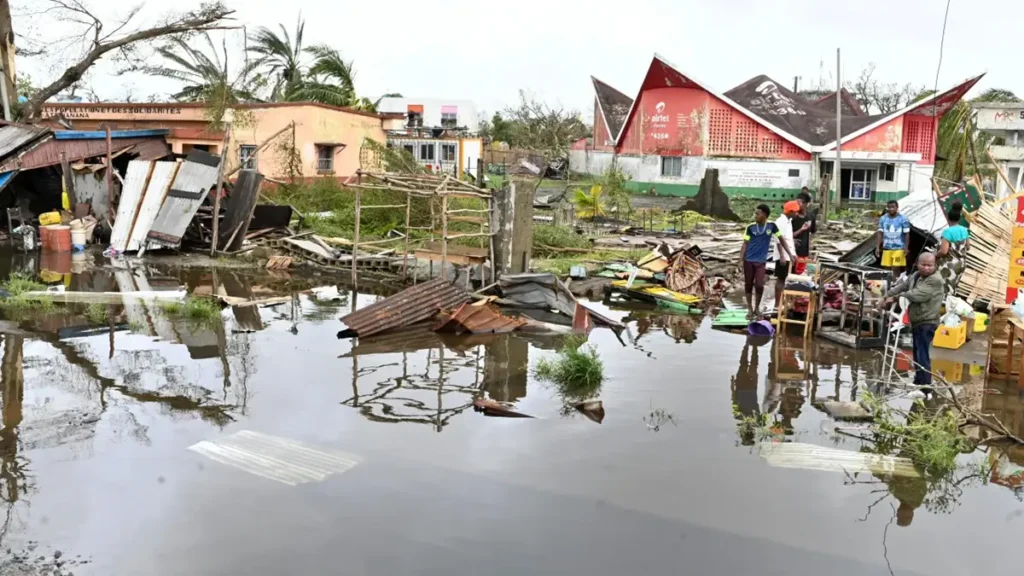
Cyclone Gezani Madagascar 2026 caused widespread destruction, 40+ deaths, and displaced thousands. Learn about disaster management, relief efforts, and climate change impacts.
Cyclone Gezani Devastates Madagascar: Deaths, Displacement and Damage
Tropical weather systems in the Indian Ocean intensified in early February 2026, culminating in Intense Tropical Cyclone Gezani, which struck the east coast of Madagascar, one of Africa’s most cyclone‑prone nations. The cyclone made landfall near the major port city of Toamasina on February 10, 2026, with powerful winds that reached well over 195 km/h, uprooting trees, flattening structures, and causing catastrophic flooding across affected regions.
The National Office for Risk and Disaster Management (BNGRC) reported that Gezani’s impact was severe: at least 40+ people lost their lives, many more were injured, and thousands of homes were destroyed or damaged, leaving large numbers displaced and in urgent need of humanitarian aid. The port city of Toamasina — home to hundreds of thousands — witnessed the worst infrastructure damage, with up to 75% of buildings damaged or destroyed and essential services like electricity and clean water disrupted.
In total, more than 16,000 people were displaced, while over 250,000 were affected by the aftermath across multiple districts. Roads and communications lines were cut off, complicating relief operations. The disaster forced Madagascar’s government to declare a state of national disaster and appeal for international aid from countries and organizations such as France, the United States, the EU, and UN agencies.
Impact on Communities and Infrastructure
The cyclone’s destructive winds and accompanying rainfall caused widespread devastation beyond just the loss of life. Entire neighbourhoods were damaged, with tens of thousands of homes completely destroyed and many more rendered uninhabitable. Schools, clinics, roads, and bridges suffered major damage, which threatened access to education and healthcare during critical post‑storm days.
Relief efforts have focused on emergency shelters, distribution of food and clean water, medical supplies, and rebuilding infrastructure. However, challenges remain due to the scale of destruction and ongoing risks such as flooding, landslides, and poor sanitation — which heightens the possibility of disease outbreaks.

Why This News Is Important for Government Exam Aspirants
For students preparing for competitive exams like UPSC, SSC, Banking, Railways, and Defence services, the Cyclone Gezani event is highly relevant under the General Studies section, particularly in topics such as Disaster Management, Environment and Climate Change, International Affairs, and Geography.
Understanding Disaster Management
Disaster management questions often focus on real‑world events illustrating how countries respond to natural calamities. Cyclone Gezani highlights:
- The impact of cyclones on vulnerable nations
- The role of national disaster agencies
- Humanitarian responses and international cooperation in crisis situations
The event also demonstrates the increasing frequency and intensity of extreme weather events, an important sub‑topic in climate change studies. Knowing such current affairs helps aspirants answer questions on government preparedness, policy response, global climate vulnerability, and strategies for mitigation and resilience.
Geopolitical and Global Insights
Madagascar’s plea for international assistance underscores the significance of collaborative disaster support systems, a frequent thematic area in civil services and foreign affairs questions. Awareness of such global events thus enriches a candidate’s understanding of how nations interact during crises.
Overall, Cyclone Gezani’s devastating impact offers vital insights into environmental phenomena, governance challenges, and humanitarian response mechanisms, making it an important topic for exam preparation.
Historical Context: Madagascar and Cyclone Vulnerability
Madagascar, the large island nation off the southeast coast of Africa, lies in the path of cyclones generated in the South‑West Indian Ocean, especially between November and March — the peak cyclone season. Historically, the nation has been frequently struck by intense storms, with previous cyclones such as Fytia hitting just weeks before Gezani in early 2026 — exacerbating existing vulnerabilities.
Due to its geographical location and widespread poverty, Madagascar remains highly susceptible to disastrous effects from tropical storms, often resulting in large displacement, economic losses, and long‑term infrastructure setbacks. These recurrent cyclones have reinforced the need for robust disaster‑risk reduction strategies and improved early warning systems.
Key Takeaways from Cyclone Gezani News
| S. No. | Key Takeaway |
|---|---|
| 1 | Cyclone Gezani made landfall in Madagascar with winds over 195 km/h, causing widespread destruction. |
| 2 | The disaster resulted in 40+ confirmed deaths, many injuries, and thousands displaced. |
| 3 | Over 16,000 people were displaced and hundreds of thousands affected across multiple regions. |
| 4 | Damage included homes, infrastructure, schools, and healthcare facilities, crippling essential services. |
| 5 | Madagascar declared a national disaster and called for international aid to support recovery. |
FAQs: Frequently Asked Questions on Cyclone Gezani
1. What is Cyclone Gezani?
Cyclone Gezani is an intense tropical cyclone that struck the east coast of Madagascar in February 2026, causing widespread destruction, deaths, and displacement.
2. When did Cyclone Gezani make landfall in Madagascar?
The cyclone made landfall near Toamasina on February 10, 2026.
3. How many people were affected by Cyclone Gezani?
Over 250,000 people were affected, with more than 16,000 displaced, hundreds injured, and dozens of fatalities reported.
4. Which areas of Madagascar were worst affected?
The port city of Toamasina and surrounding eastern districts experienced the most severe damage, including destruction of homes, schools, roads, and healthcare facilities.
5. Why is Cyclone Gezani important for government exam preparation?
It is relevant for topics in Disaster Management, Environment & Climate Change, Geography, and International Affairs, which frequently appear in exams like UPSC, SSC, Banking, Railways, and Defence services.
6. What was the government’s response to Cyclone Gezani?
Madagascar declared a national disaster and sought international humanitarian aid, including support from the UN, EU, France, and the United States.
7. How does Madagascar’s history make it vulnerable to cyclones?
Madagascar lies in the South-West Indian Ocean cyclone path, with a high frequency of tropical storms every year, particularly during November to March, which often results in fatalities, economic losses, and infrastructure damage.
8. What kind of challenges do displaced people face after the cyclone?
Displaced populations face challenges like lack of shelter, clean water, food shortages, poor sanitation, and increased risk of disease outbreaks.
Some Important Current Affairs Links

