

Crocodile Conservation Project India celebrates 50 years of wildlife protection on World Crocodile Day, highlighting gharial conservation, ecosystem restoration, and rising human-crocodile conflict management strategies.
Overview of the Crocodile Conservation Project
On World Crocodile Day (June 17, 2025), India celebrated the golden jubilee of its pioneering Crocodile Conservation Project (CCP), which began in 1975 with support from UNDP and FAO The initiative has become one of the most successful wildlife conservation efforts in India, showcasing the country’s commitment to biodiversity and ecological balance.
Focus Areas and Collaboration
The CCP initially concentrated on three major regions: Bhitarkanika National Park (for saltwater crocodiles), Satkosia Gorge Sanctuary (for gharials), and Similipal National Park (for mugger crocodiles) Herpetologists, including Sudhakar Kar and Australian specialist H.R. Bustard, led captive-breeding and habitat restoration efforts with strong involvement from UN agencies
Population Revival and Survey Data
According to the January 2025 census, there are approximately:
- 1,826 saltwater crocodiles in Bhitarkanika
- 16 gharials in Satkosia
- ~300 mugger crocodiles across Odisha
In Uttar Pradesh’s Chambal region, gharial numbers have surged from just 200 in 1975 to between 2,000–2,500 today
Role of Awareness, Infrastructure, and Community
The CCP’s success can be attributed to its multi-faceted approach: egg collection, rear-and-release, public awareness, and law enforcement. Field centres such as Nandankanan, Bhitarkanika, and Kukrail became crucial breeding hubs Collaboration between forest officials, local communities, and NGOs helped ensure sustainable coexistence
New Challenges and Conflict Management
As crocodile populations rose, human-crocodile conflicts became more frequent. In Bhitarkanika, safety measures like barricades, warning signs, and community awareness programs are being implemented to mitigate risks Odisha has shifted toward conflict management, surveillance, and research due to near-population saturation .
Nationwide Adoption and Expansions
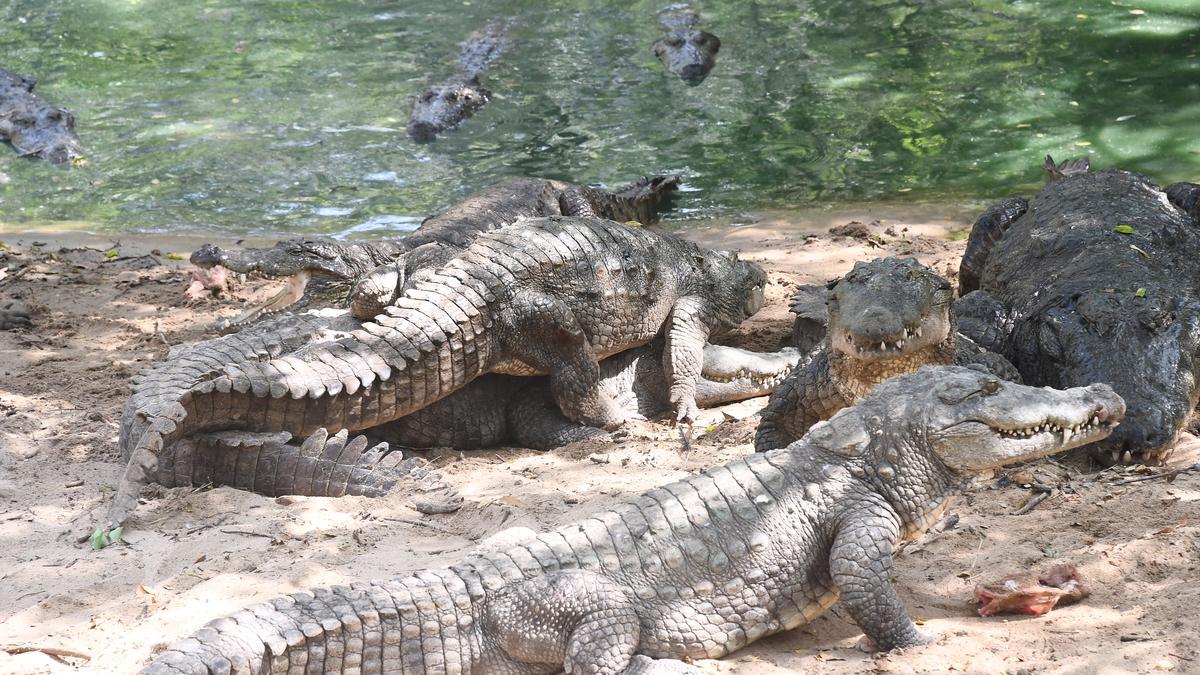
Following Odisha’s model, CCP has expanded to regions like Uttar Pradesh, Rajasthan, Tamil Nadu, Gujarat, and West Bengal . India now holds nearly 80% of the global wild
Why This News Is Important
Significance for Biodiversity Conservation
The golden jubilee of CCP is more than a celebratory milestone—it’s a testament to India’s progress in ecosystem restoration. Crocodiles are apex predators that maintain riverine food chains. Their resurgence indicates healthier aquatic ecosystems and improved biodiversity.
Relevance to Government Exam Aspirants
This story aligns with several UPSC/State PCS topics:
- Environment & Ecology (GS-3): Techniques like captive breeding, habitat restoration, and human-wildlife conflict resolution
- International Cooperation: Collaborative efforts with UNDP/FAO reflect global environmental partnerships
- Legal Framework: Protection under the Wild Life (Protection) Act, 1972, illustrates regulatory measures
- Conservation Policy: The CCP’s expansion demonstrates the implementation of national wildlife strategies and capacities
Strategic Opportunities Ahead
Acknowledging emerging conflict challenges emphasizes the need for smart conservation strategies involving:
- Community engagement frameworks
- Technological tools like alert systems
- Policy reforms balancing ecological and human needs
Exam Relevance
Questions in both prelims and mains may ask about:
- Species-specific projects like the CCP
- The role of international organizations
- Wildlife laws and their application
- Human-wildlife conflict management, especially near riverine human settlements
Historical Context: Evolution of Crocodile Conservation in India
Pre-1970s Threat Scenarios
By the 1960s, crocodile populations had plummeted due to poaching, habitat loss, and unregulated egg collection. All three species—saltwater, mugger, and especially gharial—were threatened.
Genesis of the CCP (1975 onwards)
In 1975, India launched the Crocodile Conservation Project with UNDP/FAO backing, initially at Bhitarkanika The rear-and-release technique, along with captive breeding, was pioneered at facilities like Nandankanan Zoo, Satkosia, and Kukrail Centre
Legislative Support & Institutional Framework
The project was supported by the Wild Life (Protection) Act, 1972, and integrated into India’s national biodiversity and wildlife policy framework, laying the foundation for its expansion.
Scaling to a National Model
By the late 1970s and early 1980s, the CCP had expanded to other states, establishing breeding stations in Andhra Pradesh, Tamil Nadu, Haryana, and KeralaChurches like the Madras Crocodile Bank Trust (1976) further contributed greatly
Achievements & Continuing Challenges
Over 50 years, CCP has revived wild populations and conserved nearly 80% of global wild gharials However, evolving challenges—especially conflict due to proximity with humans—have required innovative and adaptive conservation strategies.
Key Takeaways from This News
| S. No. | Key Takeaway |
|---|---|
| 1 | The Crocodile Conservation Project was launched in 1975, marking its 50th anniversary on June 17, 2025. |
| 2 | The project was initiated with help from UNDP and FAO in Odisha (Bhitarkanika, Satkosia, Similipal). |
| 3 | India now has ~1,826 saltwater crocodiles, 16 gharials, and 300 muggers in Odisha alone. |
| 4 | Human-crocodile conflict management is now a key priority after population recovery. |
| 5 | India holds around 80% of the global gharial population, reflecting CCP’s success. |
FAQs: Frequently Asked Questions
Q1. What is the Crocodile Conservation Project (CCP) in India?
The Crocodile Conservation Project is a government initiative launched in 1975 to protect and restore populations of crocodilian species—saltwater crocodiles, gharials, and muggers—across key habitats in India.
Q2. Why was the Crocodile Conservation Project launched?
It was launched to counter the drastic decline in crocodile populations caused by habitat destruction, poaching, and unregulated hunting, with assistance from UNDP and FAO.
Q3. Which states were primarily involved in the initial phase of the project?
The initial focus areas included Bhitarkanika (Odisha), Satkosia (Odisha), and Similipal (Odisha), with further expansion to states like Uttar Pradesh, Rajasthan, Tamil Nadu, and West Bengal.
Q4. What is the significance of World Crocodile Day?
World Crocodile Day, observed on June 17, aims to raise awareness about crocodile conservation and celebrates achievements like those under India’s CCP.
Q5. What are the challenges currently faced by the project?
The primary challenge is human-crocodile conflict due to increased crocodile populations in human-inhabited areas, requiring enhanced conflict mitigation strategies and surveillance.
Some Important Current Affairs Links

