
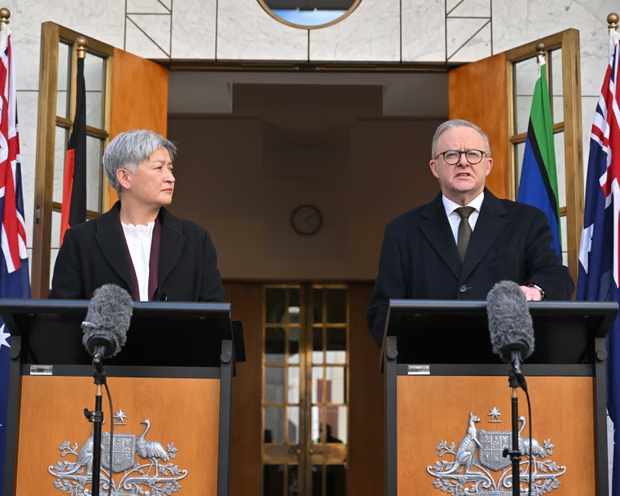
Australia recognises Palestinian state at UN General Assembly 2025, supporting the two-state solution and calling for governance reforms in the Palestinian Authority.
Australia to Recognise Palestinian State at UN in September 2025
Australia’s Official Announcement
The Australian government has officially confirmed its plan to recognise the State of Palestine during the upcoming 80th United Nations General Assembly (UNGA) session in September 2025. Foreign Minister Penny Wong announced that Australia will vote in favour of Palestine’s recognition, signalling a significant policy shift aimed at supporting a two-state solution to the Israel-Palestine conflict. This move places Australia among the growing list of nations advocating for Palestine’s membership in the UN.
Global Context of the Decision
The recognition comes at a time when international pressure is mounting on Israel to halt settlement expansion in the West Bank and resume peace negotiations. Several countries, including Spain, Norway, and Ireland, have already extended formal recognition to Palestine in recent years. Australia’s decision is expected to increase momentum for Palestinian statehood on the global diplomatic stage.
Conditions and Commitments
According to government sources, Australia’s recognition will be accompanied by a call for the Palestinian Authority to implement governance reforms, ensure democratic representation, and strengthen anti-corruption measures. The Australian government has also emphasised that recognition does not diminish its support for Israel’s right to security.
Reaction from Israel and Allies
Israel has strongly criticised Australia’s decision, labelling it as counterproductive to peace talks. The Israeli Foreign Ministry summoned Australia’s ambassador to express its protest. Meanwhile, several Middle Eastern nations and international advocacy groups have welcomed the announcement, calling it a “long-overdue step” towards justice and equality.
Impact on Australia’s Foreign Policy
This recognition marks a shift in Australia’s Middle East policy, which has traditionally leaned closer to the United States and Israel. Analysts believe the move could improve Australia’s standing in the Global South and with Arab League nations, while potentially straining diplomatic ties with Israel and some Western allies.

Why This News is Important
Significance for International Relations
Australia’s recognition of Palestine is not just a symbolic gesture — it carries diplomatic weight. By aligning itself with countries advocating Palestinian statehood, Australia is contributing to reshaping global alliances and influencing UN voting patterns. This could have implications for peace negotiations, humanitarian aid distribution, and conflict resolution frameworks in the Middle East.
Relevance for Competitive Exam Aspirants
For students preparing for government exams, especially in areas like international relations, defence studies, and current affairs, this news provides an excellent case study of foreign policy decision-making. It highlights the balance between ethical stances, diplomatic strategy, and geopolitical consequences — a topic often covered in Civil Services and Defence exams.
Historical Context
Australia’s engagement with the Israel-Palestine issue dates back to the UN’s partition plan of 1947, when Australia voted in favour of creating both Israeli and Arab states. However, over the decades, its policy leaned more towards Israel, particularly under conservative governments. The Labour government under Prime Minister Anthony Albanese has gradually shifted towards recognising Palestinian rights. In May 2024, Australia upgraded the status of the Palestinian mission in Canberra and supported UN resolutions backing Palestinian statehood. This September’s planned recognition is the most significant step yet in that policy evolution.
Key Takeaways from “Australia to Recognise Palestinian State at UN in September 2025”
| S.No. | Key Takeaway |
|---|---|
| 1 | Australia will officially recognise the State of Palestine during the 80th UNGA session in September 2025. |
| 2 | The decision is part of Australia’s support for a two-state solution to the Israel-Palestine conflict. |
| 3 | The move has received praise from Arab nations but strong criticism from Israel. |
| 4 | Recognition will be linked to Palestinian Authority governance reforms. |
| 5 | This marks a major shift in Australia’s Middle East policy and international diplomatic positioning. |
FAQs – Frequently Asked Questions
Q1. When will Australia recognise the State of Palestine at the UN?
Australia will officially recognise the State of Palestine at the 80th United Nations General Assembly session in September 2025.
Q2. What is the main reason for Australia’s decision?
The decision is aimed at supporting the two-state solution to resolve the Israel-Palestine conflict and promoting peace through diplomatic engagement.
Q3. Which Australian leader announced this recognition?
Foreign Minister Penny Wong made the official announcement.
Q4. How has Israel responded to this decision?
Israel strongly criticised the decision, calling it counterproductive, and summoned Australia’s ambassador to express its protest.
Q5. What conditions has Australia attached to the recognition?
Australia has called for Palestinian Authority governance reforms, democratic representation, and anti-corruption measures.
Q6. How does this decision impact Australia’s foreign policy?
It signals a shift towards a more balanced Middle East policy, possibly improving relations with Arab nations but risking tensions with Israel.
Q7. Which other countries have recently recognised Palestine?
Spain, Norway, and Ireland have recently extended formal recognition to the State of Palestine.
Q8. What is the historical connection between Australia and Palestine in the UN?
Australia supported the UN Partition Plan in 1947, which proposed separate Israeli and Arab states.
Q9. Why is this news relevant for competitive exam aspirants?
It is a significant example of foreign policy decision-making, relevant for international relations, political science, and current affairs sections of exams.
Q10. What is the stance of the Australian government on Israel’s security?
Australia maintains its recognition of Israel’s right to security alongside support for Palestinian statehood.
Some Important Current Affairs Links

