

Nanak Singh: The Father of the Punjabi Novel
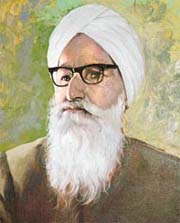
Nanak Singh, born as Hans Raj on July 4, 1897, in Chak Hamid, Jhelum district (now in Pakistan), is celebrated as the father of the Punjabi novel. His literary journey, marked by profound narratives and social commentary, has left an indelible mark on Punjabi literature.
Early Life and Adoption of Sikhism
Born into a poor Punjabi Hindu family, Hans Raj displayed an early affinity for literature. His writings began with verses on historical events and devotional songs that encouraged participation in the Gurdwara Reform Movement. His spiritual journey led him to embrace Sikhism, adopting the name Nanak Singh. In 1918, he published his first book, Satguru Mehma, a collection of hymns praising the Sikh Gurus, marking his initial literary success.
Surviving the Jallianwala Bagh Massacre
A pivotal moment in Nanak Singh’s life was his presence at the Jallianwala Bagh massacre on April 13, 1919. This tragic event, where British troops killed and injured hundreds of peaceful protesters, deeply affected him. He lost two friends in the massacre and narrowly survived himself. This harrowing experience inspired him to write Khooni Vaisakhi, an epic poem that critiqued colonial rule. The British government, wary of its provocative content, banned the poem.
Contribution to India’s Independence Movement
Nanak Singh actively participated in India’s struggle for independence by joining the Akali movement and editing Akali newspapers. His involvement led to his imprisonment by the British authorities. During his incarceration, he authored several novels, writing over 40,000 pages in longhand Gurmukhi script. His literary works during this period reflect his commitment to social justice and nationalistic fervor.
Prolific Literary Career
Over his lifetime, Nanak Singh authored more than 50 books, including novels, short stories, and plays. His novel Pavitra Paapi (The Saintly Sinner) gained immense popularity and was later adapted into a successful motion picture in 1968. His novel Ik Mian Do Talwaran (One Sheath and Two Swords) won him the Sahitya Akademi Award in 1962, India’s highest literary honor. His writings are characterized by their secular perspective, romantic idealism, and deep empathy for the human condition.
Legacy and Recognition
Nanak Singh’s contributions to Punjabi literature have been monumental. In 1998, India’s Prime Minister Inder Kumar Gujral released a postal stamp in his honor, commemorating his literary legacy. His works continue to inspire and influence readers and writers alike, solidifying his status as the father of the Punjabi novel.
Why This News Is Important
Recognition of Literary Pioneers
Highlighting figures like Nanak Singh underscores the importance of acknowledging pioneers who have shaped regional literature. His designation as the father of the Punjabi novel brings attention to the rich literary heritage of Punjab and encourages the preservation and study of regional languages and narratives.
Inspiration for Aspiring Writers
Nanak Singh’s journey from humble beginnings to literary acclaim serves as an inspiration for aspiring writers. His dedication to addressing social issues through storytelling demonstrates the power of literature as a tool for social change and personal expression.
Educational Significance
For students preparing for government exams, understanding the contributions of literary figures like Nanak Singh is crucial. It provides insights into the cultural and historical contexts of the time, enriching their knowledge base and appreciation for India’s diverse literary landscape.
Historical Context
The Jallianwala Bagh Massacre
On April 13, 1919, British troops opened fire on a peaceful gathering at Jallianwala Bagh in Amritsar, resulting in the death and injury of hundreds. This incident became a turning point in India’s struggle for independence, galvanizing national sentiment against colonial rule. Nanak Singh’s survival and subsequent literary response through Khooni Vaisakhi provided a poignant critique of the atrocities, reflecting the collective anguish and resistance of the time.
The Akali Movement
The Akali movement, active during the early 20th century, aimed at reforming Sikh gurdwaras and freeing them from corrupt management. Nanak Singh’s involvement in this movement and his role as an editor for Akali newspapers highlight his commitment to social and religious reforms, further embedding his literary works within the socio-political fabric of the era.
Key Takeaways from Nanak Singh’s Legacy
| S.No. | Key Takeaway |
|---|---|
| 1 | Nanak Singh is acclaimed as the father of the Punjabi novel, having authored over 50 literary works. |
| 2 | He survived the Jallianwala Bagh massacre, which profoundly influenced his writings against colonial rule. |
| 3 | His novel Ik Mian Do Talwaran earned him the prestigious Sahitya Akademi Award in 1962. |
| 4 | Nanak Singh actively participated in India’s independence movement, notably through the Akali movement. |
| 5 | His literary works continue to inspire and are integral to Punjabi literature and cultural studies. |
Important FAQs for Students from this News
Q1: Why is Nanak Singh called the father of the Punjabi novel?
A1: Nanak Singh is known as the father of the Punjabi novel because he pioneered modern storytelling in Punjabi literature. His novels addressed social issues, historical events, and human emotions, significantly shaping the Punjabi literary tradition.
Q2: What was the impact of the Jallianwala Bagh massacre on Nanak Singh?
A2: Nanak Singh survived the Jallianwala Bagh massacre, which deeply influenced his literary work. His poem Khooni Vaisakhi was a direct response to the massacre, criticizing British colonial rule and highlighting the suffering of the Indian people.
Q3: Which book won Nanak Singh the Sahitya Akademi Award?
A3: Nanak Singh won the Sahitya Akademi Award in 1962 for his novel Ik Mian Do Talwaran (One Sheath and Two Swords).
Q4: What was Nanak Singh’s contribution to India’s freedom struggle?
A4: Apart from his literary activism, Nanak Singh participated in the Akali movement, wrote for Akali newspapers, and was even imprisoned for his involvement in the independence movement.
Q5: How has Nanak Singh’s work influenced modern Punjabi literature?
A5: Nanak Singh’s works laid the foundation for progressive Punjabi literature. His novels continue to inspire contemporary writers, and his themes of social justice, nationalism, and human emotions remain relevant today.
Some Important Current Affairs Links

