
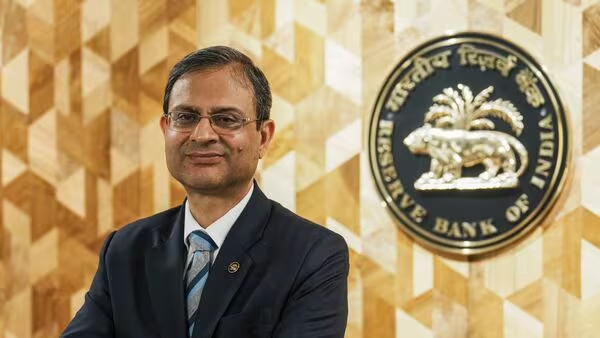
RBI Monetary Policy 2025 highlights include repo rate at 6.50%, GDP growth forecast raised to 7.0%, and inflation control focus. Perfect for UPSC, SSC, Banking & Railway exam prep.
RBI Monetary Policy Statement 2025–26: Full Analysis
RBI Keeps Repo Rate Unchanged at 6.50%
In its first monetary policy review for FY 2025–26, the Reserve Bank of India (RBI) has decided to maintain the repo rate at 6.50% for the sixth consecutive time. This decision comes in the backdrop of India’s inflation slowly edging closer to the RBI’s comfort zone of 4%, although challenges remain due to food price volatility. The Monetary Policy Committee (MPC), by a majority of 5:1, voted to keep the policy stance focused on withdrawal of accommodation to ensure inflation remains aligned with the target while supporting growth.
Inflation Outlook: Mixed Signals, Careful Approach
The RBI remains cautious about headline inflation, especially due to persistent food inflation. Although core inflation—which excludes food and fuel—has moderated, high vegetable prices have pushed overall inflation beyond the target in recent months. Governor Shaktikanta Das highlighted the need to remain watchful, stating that inflation management is critical to sustaining India’s economic growth momentum.
GDP Growth Forecast for 2025–26 Raised to 7.0%
The central bank raised the GDP growth forecast for 2025–26 to 7.0%, up from earlier estimates of 6.8%. This revision reflects confidence in strong domestic demand, robust urban consumption, and improvement in rural activity. Key sectors like construction, manufacturing, and financial services are expected to lead this growth, supported by government capital expenditure and gradual global recovery.
Monetary Policy Stance: Withdrawal of Accommodation
The RBI continues with the policy stance of ‘withdrawal of accommodation’, which means that it is gradually moving away from the ultra-loose monetary policy that was implemented during the pandemic. This is done to ensure inflation remains within the 2–6% band, and financial stability is not compromised. The stance indicates that rate cuts are not likely until inflation risks subside substantially.
Other Highlights: Liquidity and Digital Rupee
The RBI plans to manage excess liquidity in the banking system proactively. It also discussed plans to expand the scope of the Digital Rupee pilot, aimed at enhancing efficiency in the financial ecosystem. Moreover, the central bank reiterated its commitment to financial inclusion through digital infrastructure and regulated innovations in the fintech space.
B) Why This News is Important
Relevant for Multiple Government Exams
The RBI’s Monetary Policy Statement is highly relevant for exams like UPSC, SSC, RBI Grade B, NABARD, SBI PO, IBPS PO, and State PSCs. Questions related to repo rate, GDP forecast, inflation, and RBI’s stance often appear in Economy or Current Affairs sections of these exams. Understanding this policy provides aspirants with critical insights into macroeconomic management and central banking tools.
Helps Build Conceptual Clarity on Inflation and Growth
The statement balances between price stability and economic growth, a core topic in both Prelims and Mains of civil services and finance-oriented exams. It also tests the aspirant’s ability to connect news with underlying economic principles like monetary transmission mechanism, inflation targeting, and GDP forecasting methods.
C) Historical Context: RBI’s Recent Policy Direction
Since 2022, the RBI has aggressively raised the repo rate from a pandemic-era low of 4.00% to 6.50% to control surging inflation caused by supply chain disruptions, geopolitical tensions, and rising commodity prices. After achieving relative stability in 2024, the RBI adopted a wait-and-watch approach, pausing rate hikes for several consecutive meetings. The stance of withdrawal of accommodation has remained unchanged since mid-2023, emphasizing caution in easing policy too soon, despite global trends of softening inflation.
This approach reflects the RBI’s dual mandate of containing inflation and ensuring growth, while also managing external sector stability in the face of global uncertainties like Fed rate changes and crude oil prices.
D) Key Takeaways from RBI’s Monetary Policy Statement 2025–26
| S.No. | Key Takeaway |
|---|---|
| 1 | RBI kept the repo rate unchanged at 6.50% for the sixth straight meeting. |
| 2 | The GDP growth forecast for FY 2025–26 has been revised upward to 7.0%. |
| 3 | Inflation remains a concern due to high food prices, despite easing core inflation. |
| 4 | RBI continues its ‘withdrawal of accommodation’ policy stance. |
| 5 | Focus on expanding Digital Rupee pilots and improving liquidity management. |
FAQs – Frequently Asked Questions
1. What is the current repo rate as per RBI’s Monetary Policy Statement 2025–26?
The repo rate remains unchanged at 6.50% as per the August 2025 announcement.
2. Why did the RBI decide not to change the repo rate?
The RBI cited persistent food inflation and the need to ensure sustainable price stability while supporting economic growth.
3. What is the GDP growth forecast for India for FY 2025–26?
The RBI revised the GDP growth projection to 7.0%, up from earlier estimates of 6.8%.
4. What does ‘withdrawal of accommodation’ mean in monetary policy?
It means the RBI is gradually tightening monetary policy, reversing the easy money stance taken during the pandemic to manage inflation risks.
5. What are some other highlights of the monetary policy besides interest rates?
The RBI announced plans to enhance the Digital Rupee pilot, improve liquidity management, and support financial inclusion through technology.
Some Important Current Affairs Links

