
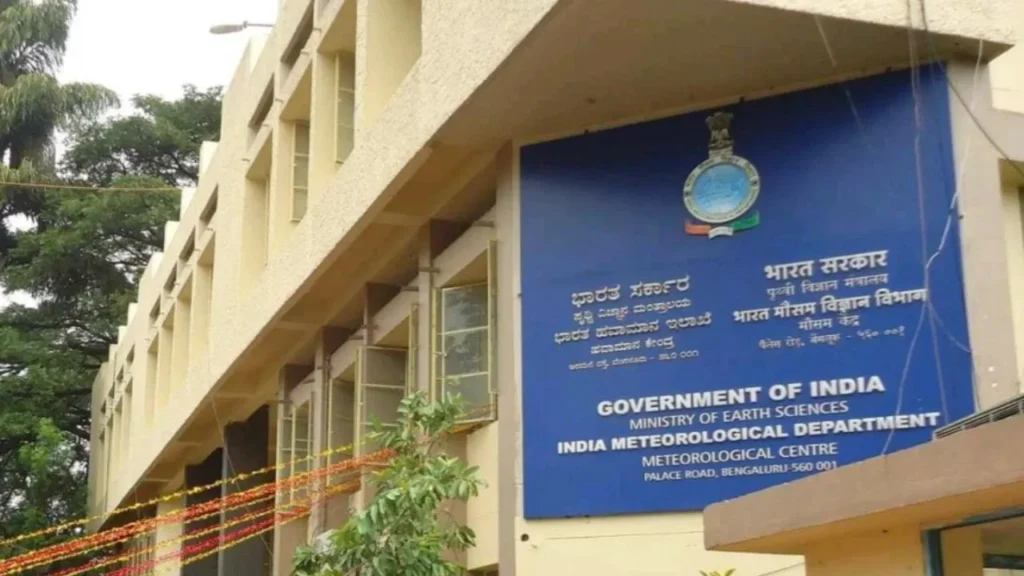
Weather Derivatives in India: NCDEX and IMD sign MoU to launch India’s first rainfall-based financial products for farmers and agri-sectors, enhancing climate risk management.
🌦️ India’s First Weather Derivatives: A New Tool for Climate Risk Management
Introduction to the Landmark MoU
On June 26, 2025, the National Commodity & Derivatives Exchange Ltd (NCDEX) and the India Meteorological Department (IMD) signed a Memorandum of Understanding (MoU) to introduce India’s first-ever weather derivatives, beginning with a rainfall-indexed product This agreement marks a significant milestone in integrating weather risk into formal financial markets, aiming to provide farmers and allied industries with a robust shield against unpredictable climate events.
What Are Weather Derivatives?
Weather derivatives are financial contracts whose payouts depend on weather indices, such as accumulated rainfall. In this case, the NCDEX–IMD product will track real-time and historical rainfall data from IMD. If rainfall deviates from the contracted range—say, during a drought or excessive rain—stakeholders receive a payout to compensate for crop losses or reduced productivity
How the Partnership Will Work
- Data sourcing: IMD will provide precision-graded historical and real-time rainfall data across India
- Product development: NCDEX will create seasonal and geographically targeted derivative contracts, likely aligned with monsoon cycles
- Regulatory phase: Product pilots must complete internal testing and secure regulatory approval, though no specific launch date is confirmed
Who Benefits from These Instruments?
- Farmers & FPOs (Farmer Producer Organisations): Transfer weather risk, stabilize incomes.
- Agri-traders: Manage fluctuations in commodity supply due to weather variation.
- Transportation & Allied Industries: Shield operations from weather-induced interruptions.
- Policy Think Tanks & Analysts: Gain data-driven tools to assess climate resilience trade-offs
Remarks from Key Officials
- Arun Raste, MD & CEO, NCDEX: “Weather derivatives have long been a foundational need… providing a market-based solution to weather risk, empowering farmers, traders… to manage climate uncertainty more effectively”
- Dr. Mrutyunjay Mohapatra, DG, IMD: “Through this collaboration, we are extending our scientific capabilities into the financial domain, allowing weather data to become a powerful instrument of economic stability”

Why This News Is Important
Strengthening Farmer Livelihoods
India’s agrarian economy is heavily dependent on monsoon rainfall—with 70–90% of annual precipitation occurring in this period Erratic rain patterns can devastate yields. By offering weather-indexed financial tools, the NCDEX–IMD initiative helps protect farmers from climate-driven income shocks, elevating their financial security.
Boosting Market and Infrastructure Resilience
Beyond agriculture, weather derivatives benefit sectors like transportation, logistics, and insurance, all of which suffer losses from weather disruptions. This initiative introduces market-based risk hedging, fostering a financially resilient ecosystem that adapts to environmental uncertainties.
Fostering Innovation in Financial Markets
These derivatives represent a paradigm shift—integrating scientific meteorological data with financial instruments for the first time in India. This collaboration could catalyze the growth of parametric derivatives, weather-indexed insurance, and climate-smart financial products, aligning with global climate finance trends.
Enhancing Capacity and Knowledge
The agreement mandates joint training programs, research, and stakeholder outreach, empowering FPOs, traders, and analysts to leverage these new tools effectively. Such capacity building is crucial for widespread adoption and functional implementation.
Historical Context
Origins of Weather Risk Instruments in India
Although global financial markets have used weather derivatives since the late 1990s, India lacked formal instruments tied to its unique climate patterns. Discussions on weather-indexed products by Indian exchanges began as early as 2008
Regulatory Progress and Government Support
The Finance Ministry added weather to the list of approved derivatives in recent years, opening regulatory avenues. However, the challenge has been technical data access and monetization—solved now through IMD’s direct data-sharing with NCDEX.
Strengthening Through Institutional Collaboration
By combining IMD’s scientific capability with NCDEX’s commodity market infrastructure, this MoU addresses both technical and institutional bottlenecks. It lays a robust framework for quantitative risk modeling, real-time monitoring, and regulated trading environments.
Key Takeaways from “India’s First Weather Derivatives”
Key Takeaways from Weather-Derivatives Initiative
| S No. | Key Takeaway |
|---|---|
| 1 | MoU signed on June 26, 2025 between NCDEX and IMD to launch India’s first weather derivatives |
| 2 | Initial focus on rainfall-indexed products, using historical and real-time IMD data |
| 3 | Offers seasonal and location-specific derivative contracts to hedge climate risks |
| 4 | Primary beneficiaries: farmers, FPOs, agri-traders, transportation, insurance, and policy think tanks. |
| 5 | Includes capacity building, joint research, and training, promoting widespread adoption |
FAQs: Frequently Asked Questions
1. What are weather derivatives?
Weather derivatives are financial contracts that provide payouts based on weather parameters, such as temperature, rainfall, or wind speed. They are used to hedge against weather-related risks, especially in agriculture and logistics.
2. Why are weather derivatives important for Indian farmers?
Farmers in India are highly dependent on monsoon rainfall. Weather derivatives help them protect against irregular rainfall, ensuring financial stability during droughts or excessive rain.
3. What role will IMD play in the NCDEX weather derivative project?
IMD will supply historical and real-time rainfall data with high spatial and temporal resolution, which will serve as the underlying metric for rainfall-indexed derivatives.
4. When will the first weather derivative be launched?
Though the MoU was signed on June 26, 2025, the actual launch date depends on product development, pilot testing, and regulatory approvals. No confirmed launch date has been announced yet.
5. Which sectors can benefit from these derivatives besides agriculture?
In addition to agriculture, sectors such as transportation, insurance, power generation, and commodity trading can use weather derivatives to manage operational risks caused by climate variability.
6. Are weather derivatives new to the global market?
No. Weather derivatives have been used globally since the late 1990s, especially in the United States and Europe, but they are new to India’s financial ecosystem.
7. Is this initiative supported by any government department?
Yes, the initiative is being supported by the Ministry of Earth Sciences, under which IMD operates, and aligns with India’s broader goals for climate-resilient agriculture and financial inclusion.
Some Important Current Affairs Links

