
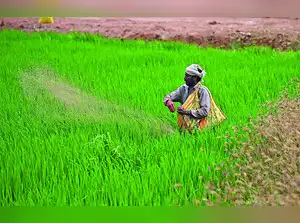
India Saudi DAP agreement: India secures a 5-year deal with Saudi Arabia’s Ma’aden to import 3.1 million MT of DAP annually, ensuring fertilizer security amid China’s phosphate export restrictions.
India Secures Strategic 5‑Year DAP Fertilizer Deal with Saudi’s Ma’aden
Strengthening India’s Fertilizer Security
Amid global supply chain challenges, India has reached a milestone by signing a five-year agreement with Saudi Arabian mining giant Ma’aden to import 3.1 million metric tonnes (MT) of Diammonium Phosphate (DAP) annually, beginning in FY 2025–26 The contract includes an option to extend for an additional five years by mutual consent, providing long-term stability for India’s fertilizer-dependent agriculture sector
Catalyst: China’s Export Restrictions
China had abruptly restricted phosphate exports in June 2025, impacting global DAP availability, including pipelines to India This supply disruption prompted New Delhi to diversify its fertilizer sources, fast-tracking partnerships with alternative global producers.
High-Level Diplomatic Engagement
Union Minister J.P. Nadda led the delegation from July 11–13, 2025, signing this key deal with Ma’aden on behalf of Indian public-sector fertilizer companies: Indian Potash Ltd (IPL), KRIBHCO, and Coromandel/CIL Meetings were also held between Nadda and Saudi Industry Minister Bandar bin Ibrahim Al Khorayef, and further discussions included Indian and Saudi PSUs exploring mutual investments in fertilizer, petrochemical, and pharmaceutical sectors
Joint Working Group Initiatives
To strengthen cooperation, a joint working group has been set up—led by India’s Fertilizers Secretary and Saudi Arabia’s Vice Minister for Mining Affairs—tasked with exploring long-term collaboration in customized fertilizer R&D and production tailored to Indian farming conditions
Impact on India’s DAP Imports
In FY 2024–25, India imported approximately 1.9 MMT of DAP from Saudi Arabia, marking a 17 % year-on-year increase from 1.63 MMT in FY 2023–24This agreement almost doubles the annual volume, scaling up India’s sourcing to 3.1 MMT annually—ensuring a more assured supply chain amid global volatility

Why This News Matters
Securing Agriculture’s Backbone
DAP is critical to India’s farming ecosystem, often second only to urea in usage. Timely availability influences yields, particularly during the kharif and rabi seasonsWith China limiting exports, this strategic South-East supply line is key to preventing domestic shortages and price spikes.
Boost to National Food Security
Increased DAP imports support India’s mission to ensure food security as farmer productivity depends heavily on adequate nutrition. A consistent supply of fertilizers safeguards against disruptions due to geopolitical supply shocks.
Economic Diversification & Diplomacy
This deal builds upon India–Saudi Arabia ties beyond energy, focusing on agriculture, chemicals, and investment cooperation. High-level diplomacy reflects a strategic shift to life sciences and trade diversification.
PSUs & Research Collaboration
The pact opens new avenues for Indian PSUs to invest in Saudi fertilizer ventures, and vice versa. Importantly, it promotes R&D tailored to India’s agrarian needs, pushing innovation in customized nutrient solutions.
Policy Alignment & Preparedness
The agreement highlights India’s proactive policy approach—tracking global trends, anticipating risks from China’s policy shifts, and swiftly arranging backup supply chains with Saudis and Moroccans
Historical Context: Why India Turned to Saudi Arabia
Overdependence on China
Historically, China was a dominant global supplier of phosphate-based fertilizers. However, in June 2025, Beijing imposed export curbs on such essential inputs, triggering global supply shocks and prompting India to seek alternate sources
Rising India–Saudi Cooperation
In recent years, India and Saudi Arabia have deepened ties—moving from traditional energy focus to include trade, agriculture, medicine, and pharmaceuticals. Prime Minister Modi’s April 2025 visit and Nadda’s July visit mark diplomatic engagements leading to several mutual MoUs
Previous DAP Trends & Import Gaps
India’s dependence on imported DAP has grown: from 1.6 MMT in FY 2023–24 to 1.9 MMT in FY 2024–25 Yet domestic production remained limited, making diversified imports critical for full-season crop support.
Key Takeaways from “India–Saudi 5-Year DAP Agreement”
| # | Key Takeaway |
|---|---|
| 1 | India signed a 5‑year contract with Saudi’s Ma’aden for 3.1 MMT DAP annually, with a 5-year extension option. |
| 2 | The agreement offsets Chinese export curbs and secures India’s fertilizer supply. |
| 3 | High-level diplomacy: Minister Nadda led the deal during his July 11–13, 2025 visit. |
| 4 | A joint working group will explore fertilizer R&D and sector collaboration. |
| 5 | The deal raises Saudi DAP supply to India from 1.9 MMT (FY 2024‑25) to 3.1 MMT (FY 2025‑26). |
FAQs: Frequently Asked Questions
1. What is DAP fertilizer, and why is it important for Indian agriculture?
Answer: Diammonium Phosphate (DAP) is a widely used phosphorus fertilizer that helps in root development and enhances crop yield. It’s especially important for major crops like wheat, paddy, and maize.
2. Why did India sign a fertilizer agreement with Saudi Arabia?
Answer: India signed the deal to secure a steady supply of DAP fertilizer amid global shortages caused by China’s restrictions on phosphate exports.
3. How much DAP will India import annually under this agreement?
Answer: India will import 3.1 million metric tonnes of DAP annually from Saudi Arabia’s Ma’aden for five years, starting from FY 2025–26.
4. Which Indian PSUs are involved in this agreement?
Answer: Indian Potash Ltd (IPL), KRIBHCO, and Coromandel International Ltd (CIL) are the three public sector undertakings (PSUs) involved in the agreement.
5. How does this agreement affect India’s food security?
Answer: The deal ensures uninterrupted availability of DAP, which supports agricultural productivity and thereby strengthens India’s food security.
6. What triggered India’s urgency to diversify fertilizer imports?
Answer: China’s sudden export restrictions on phosphate fertilizers created global supply issues, prompting India to quickly seek alternative long-term sources.
7. Is there any research or development component included in this agreement?
Answer: Yes, a joint working group has been formed to explore R&D in fertilizer formulations tailored to Indian soil and crop conditions.
8. What is the potential extension clause in the agreement?
Answer: The agreement can be extended for an additional five years upon mutual agreement between the Indian and Saudi stakeholders.
Some Important Current Affairs Links

