Currently Empty: ₹0

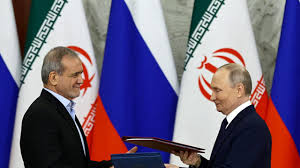
Russia Iran Nuclear Deal: Russia to Build Eight Nuclear Reactors in Iran
0 Comments
Russia Iran nuclear deal strengthens energy cooperation as Russia commits to building eight nuclear reactors in Iran, boosting Bushehr capacity and regional ties.
Introduction
In early June 2025, Iran’s Atomic Energy Organization (AEOI) head, Mohammad Eslami, confirmed that Russia is set to build eight nuclear power plants in Iran. This revelation marks a significant leap in Iran’s civilian nuclear programme and underscores deepening Russo-Iranian energy cooperation
Details of the Agreement
Eslami, speaking to Iran’s parliament security commission, stated that a previously-signed contract with Russia outlines the construction of eight reactors—four of which will be near Bushehr, site of Iran’s current nuclear power plant These new units are to be completed in phases, utilizing Russian credit lines. Additionally, Iran is concurrently working—with its domestic expertise—on Bushehr units 2 and 3
Strategic Energy Vision
This initiative is part of Iran’s broader energy strategy to triple its nuclear power generation capacity—expanding beyond the 1,000 MW produced by Bushehr’s first unit The deal aligns with Iran’s long-term energy diversification goals and addresses domestic demand for clean, baseload power.
Implications for Regional Dynamics
Russia’s commitment reinforces its position as a global nuclear reactor supplier. Already active in multiple countries, this deal deepens its footprint in the Middle East . For Iran, the pact lessens dependence on Western energy imports and boosts strategic autonomy amid international sanctions.
Reactions & Geopolitical Context
The agreement followed the January 2025 Iran–Russia Comprehensive Strategic Partnership Treaty, targeting energy and defense cooperation over 20 years Meanwhile, Western powers and the IAEA continue to monitor to ensure the collaboration remains within the framework of the Nuclear Non-Proliferation Treaty (NPT) for peaceful purposes.

✅ Why This News Is Important
Relevance for Competitive Exams
Understanding global nuclear energy partnerships is vital for exam perspectives under GS Paper II—International Relations—and GS Paper III—Energy & Infrastructure. This development epitomizes how civil‑nuclear cooperation intersects with diplomacy, sanctions regimes, and non‑proliferation frameworks.
Strategic Energy Security Perspective
With this pact, Iran moves significantly toward its target of tripling nuclear power capacity. It aligns with India’s and other nations’ policies promoting nuclear energy as a clean alternative, making it a relevant case study for sustainable development and energy policies.
Geopolitical & Economic Implications
The deal cements Iran–Russia energy ties, forming a strategic bloc capable of countering Western sanctions. This positions both countries as stronger players in regional geopolitics, offering students insight into the strategic uses of bilateral agreements.
📜 Historical Context
Origins of Bushehr Cooperation (1995–2011)
Iran’s first nuclear collaboration with Russia began in the mid-1990s, culminating in Bushehr’s initial 1,000 MW reactor coming online in 2011 Russia retained control of spent fuel to assuage Western nuclear proliferation fears.
Expansion Plans (2014 Onwards)
In 2014, both nations struck a deal allowing for up to eight additional reactors—two to be appended to Bushehr and six more elsewhere Construction of Bushehr units 2 and 3 began in 2017.
Strategic Partnership Treaty (2025)
In January 2025, Iran and Russia formalized a 20-year strategic partnership, which included provisions for nuclear energy cooperation This strengthened framework now underpins the reactor expansion plan.
Global Nuclear Energy Context
Russia is actively constructing reactors globally—from Bangladesh to Egypt and now Iran—as part of its strategy to dominate the nuclear export market
📋 Key Takeaways from “Russia to Build Eight Nuclear Reactors in Iran”
FAQs: Frequently Asked Questions
Q1. Why is Russia building nuclear reactors in Iran?
Russia is constructing eight nuclear reactors in Iran to support its energy development strategy. This cooperation strengthens their bilateral ties under the 2025 strategic partnership agreement.
Q2. Where will the new reactors be located?
Four of the planned eight reactors will be built near the existing Bushehr nuclear power plant in southern Iran. Locations for the other reactors have not been publicly disclosed yet.
Q3. What is the capacity of Iran’s current nuclear power generation?
Iran’s Bushehr plant currently generates about 1,000 MW of nuclear power. The new reactors aim to significantly increase this capacity.
Q4. How does this nuclear deal affect global geopolitics?
The deal enhances Russia’s role as a global nuclear energy supplier and bolsters Iran’s energy independence. It also has implications for global diplomacy and non-proliferation efforts.
Q5. Is the nuclear cooperation between Russia and Iran under international scrutiny?
Yes, international agencies like the IAEA monitor such developments to ensure compliance with the Nuclear Non-Proliferation Treaty (NPT) and that nuclear materials are used for peaceful purposes.
Q6. How is this news relevant for competitive exams?
It is relevant under international relations, energy infrastructure, and geopolitical affairs sections, especially for UPSC, State PCS, and defence exams.
Some Important Current Affairs Links