Currently Empty: ₹0

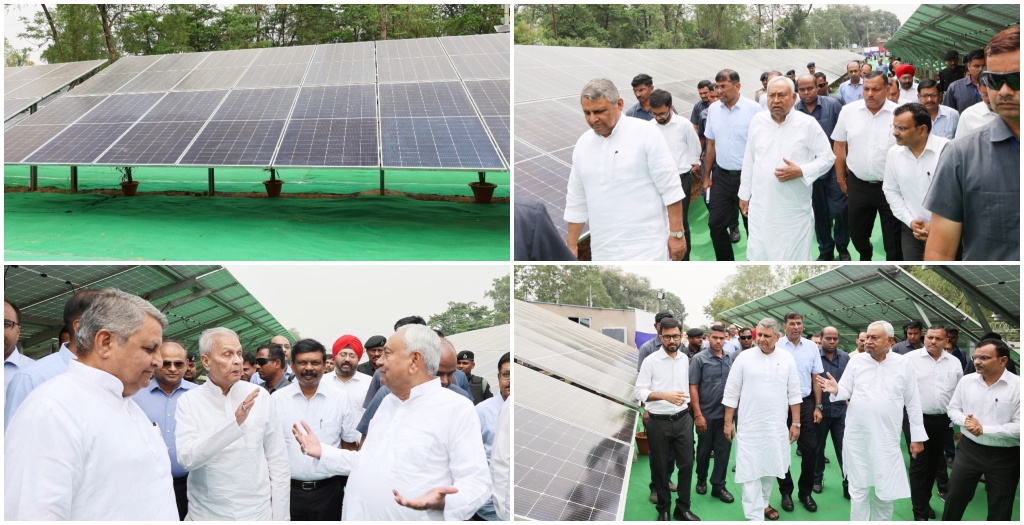
Bihar Canal Solar Project: 2 MW Plant Inaugurated under Jal Jeevan Hariyali Scheme
0 Comments
Bihar canal solar project launched under Jal Jeevan Hariyali scheme. Patna gets its first 2 MW canal-side solar plant funded through a PPP model. Know its benefits, key takeaways, and exam-relevant facts.
Introduction
On June 10, 2025, Bihar Chief Minister Nitish Kumar inaugurated Bihar’s first 2 MW canal‑side solar energy project along the Bikram Lock Canal in Patna district. Established under the state government’s Jal‑Jeevan‑Hariyali Abhiyan, the project exemplifies an innovative step toward sustainable energy infrastructure and environmental conservation
Project Location & Capacity
- Location: Bikram Lock Canal, Patna district
- Installed Capacity: 2 Megawatt (MW)
- Land Ownership: Canal embankment land owned by the Water Resources Department
Zero‑Cost Development via PPP
Remarkably, the solar setup was completed without any financial burden on the state exchequer, being financed and constructed by a private firm under a Public‑Private Partnership model. The state will purchase electricity at a fixed rate of ₹3.10 per unit, locked in for a 25‑year period
Strategic Objectives
- Promoting green and clean energy in rural Patna.
- Making optimal use of idle canal/embankment land.
- Reducing dependence on fossil fuels, thereby cutting down carbon emissions.
- Facilitating rural electrification, economic growth, and employment generation in adjacent areas
CM’s Vision & Surveys
CM Nitish Kumar highlighted this as a pilot initiative, with the aim of replicating it along the state’s canals, dams, and embankments. He emphasised the focus on granting reliable, eco‑friendly, affordable, uninterrupted electricity to every household in Bihar
Local Impact & Beneficiaries
- Power will be supplied to Bikram and surrounding communities, supporting domestic and agricultural needs.
- Local employment during the construction and operation phases.
- Fueling decentralised energy benefits and reducing transmission dependence
Future Prospects
The government plans to expand this model with floating solar plants on reservoirs, corridor‑based solar arrays along highways and railways, and hybrid agro‑solar systems in rural regions — all under the same Jal‑Jeevan‑Hariyali umbrella

Why This News is Important
Alignment with National & State Policies
This project fits within the federal push under India’s National Solar Mission and Bihar’s own Jal‑Jeevan‑Hariyali Abhiyan, promoting dual goals: renewable energy adoption and environmental sustainability—critical subjects in civil, banking, railways, and defence exam syllabi.
Innovative Use of Resources
Using canal embankments for solar installations reflects strategic land-use planning. This innovation addresses land scarcity and enhances energy efficiency—a topic of relevance in geography and public administration.
Cost‑effective Model
With zero burden on public finances and a static tariff of ₹3.10/unit for 25 years, this initiative introduces aspirants to PPP models and long-term PPA contracts, essential in economics, finance, and infrastructure policy questions.
Environmental & Socio‑economic Impact
The project serves as a model for reducing carbon footprint, promoting rural electrification, and generating local employment—all key themes across defence infrastructure, civil service development, railway electrification, banking-finance inclusion, and policing-community relations.
Historical Context
Green Energy Push in India
India has been steadily ramping up its green energy ambitions since the launch of the National Solar Mission (2010), targeting 100 GW from solar by 2022—later revised upward.
State-Level Activities in Bihar
Bihar has seen limited solar growth. With only about 200 MW in total capacity by 2024, this canal-side solar plant marks the state’s first-of-its-kind project
Precedent Elsewhere
States like Gujarat, Kerala, and Madhya Pradesh have piloted canal-top and floating solar projects, inspiring Bihar’s initiative. It aligns with India’s trajectory toward innovative solar land-use methodologies.
Key Takeaways from Bihar Canal‑Side Solar Plant
FAQs: Frequently Asked Questions
1. What is the capacity of the newly inaugurated solar plant in Bihar?
The canal-side solar plant inaugurated in Patna has an installed capacity of 2 megawatts (MW).
2. Where is the solar plant located?
The plant is located along the Bikram Lock Canal in the Patna district of Bihar.
3. How was the project funded?
The project was developed under a Public-Private Partnership (PPP) model without any financial burden on the state government.
4. What is the rate at which electricity will be purchased from the plant?
Electricity will be purchased at a fixed rate of ₹3.10 per unit for 25 years.
5. Which state initiative is this project a part of?
The project is a part of the Jal-Jeevan-Hariyali Abhiyan launched by the Bihar government.
6. How does this project help in exams like UPSC, State PSC, and others?
This project highlights themes like renewable energy, PPP models, environmental sustainability, and rural development — all relevant to syllabus topics in civil services, state exams, and infrastructure-related roles.
Some Important Current Affairs Links