Currently Empty: ₹0


Census 2027 Notification: India’s First Digital Census With Caste Data and Delimitation Impact
0 Comments
Census 2027 Notification issued on June 18, 2025, marks India’s first digital census with caste enumeration. Learn how it impacts delimitation, reservations, and exam preparation for UPSC and other competitive exams.
India Notifies Census 2027: What Aspirants Need to Know
📆 Official Notification & Timeline
On June 16, 2025, the Government of India formally issued the gazette notification initiating the 16th national census under Section 3 of the Census Act, 1948. The process will occur in two phases:
- Phase 1 – House Listing Operation (HLO): Begins October 1, 2026, in snow-bound and remote regions (Ladakh, J&K, Himachal, Uttarakhand).
- Phase 2 – Population Enumeration (PE): Begins March 1, 2027, nationwide
Digital Transformation
India’s first fully digital census—citizens can self‑enumerate via mobile/web portals, while enumerators use smartphones equipped with GPS, geofencing, and real-time validation tools This ensures faster, more accurate and verifiable data collection.
Inclusion of Caste Data
For the first time since 1931, the census will include caste enumeration, gathering details on religion and caste. Approved by the Cabinet in April 2025, this marks a historic step toward social justice and targeted policymaking
Scale & Security
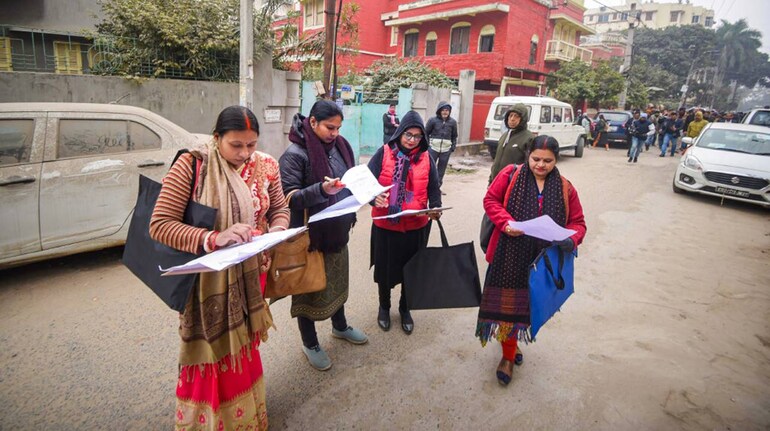
Over 3.4 million enumerators and 130,000 supervisors will be deployed. Stringent data security measures are being implemented to safeguard citizen privacy during collection, transfer, and storage
Policy & Political Implications
- Delimitation: Census 2027 data will trigger the redrawing of electoral boundaries, potentially impacting seat allocation ahead of the 2029 general election
- Reservations: Caste data will inform social welfare schemes, SC/ST benefits, and women’s reservation implementation.
Why This News Matters for Exam Preparation
📊 Foundation for Government Policy
The census is the most comprehensive source of demographic, social, and economic data, crucial for policy-making, budget allocation, and administrative reform.
🏛️ Constitutional & Legislative Relevance
Under Article 82 and Articles 330 & 332, census data feeds into delimitation and reservation of seats in legislatures—key topics in polity and governance modules.
💼 Social Justice & Public Administration
Inclusion of caste data revitalizes discussions around social equity, affirmative action, and welfare targeting—topics that regularly feature in essay, ethics, and GS papers.
🔐 Exam Focus Areas
Understanding digital enumeration advancements, data privacy initiatives, and political dynamics (like delimitation) builds analytical depth—ideal for both objective and subjective answers.
Historical Context: From Paper to Pixels
- Longest Census Gap: Unlike the standard decennial schedule, the 2021 census was postponed due to COVID-19, causing a 16-year delay following 2011
- Digitization Initiative: The 2027 census follows a 2019 proposal by Home Minister Amit Shah for a digitized process using smartphone apps, backed by a ₹3,768 crore allocation in the 2021-22 Budget
- Caste Enumeration Hiatus: The 1931 census was the last to include comprehensive caste data. While 2011 included it, results were withheld. 2027 restores transparency in caste profiling
- Delimitation Precedent: The 84th Amendment (2001) froze seat allocation until after the first census post-2026. The 2027 census triggers the next round, reshaping political representation
Key Takeaways from the Census 2027 Notification
FAQs: Frequently Asked Questions
1. What is the date of notification for Census 2027?
The official notification for Census 2027 was issued on June 16, 2025 under the Census Act, 1948.
2. When will the census operations start and end?
The House Listing Operation (HLO) will begin on October 1, 2026, in remote regions, while Population Enumeration (PE) will begin nationwide on March 1, 2027.
3. What is unique about Census 2027?
This will be India’s first fully digital census with provisions for self-enumeration and real-time data verification.
4. Will caste data be collected in Census 2027?
Yes, for the first time since 1931, caste data will be officially recorded in the national census.
5. Why is the 2027 Census important for government exams?
It has implications for delimitation, reservation policy, digital governance, and socio-economic planning, all of which are commonly featured in government exams like UPSC, SSC, and State PSCs.
6. How many enumerators will be involved in the census?
Over 3.4 million enumerators and 130,000 supervisors will be deployed for data collection across India.
7. What is delimitation, and how is it linked to the census?
Delimitation refers to redrawing electoral constituency boundaries based on updated population data. Census 2027 will be used for this purpose under Article 82 of the Constitution.
Some Important Current Affairs Links