Currently Empty: ₹0

Indus River System: Exploring Its Significance and Geopolitical Impact
0 Comments
Introduction: The Significance of the Indus River System
The Indus River System, originating from the Tibetan Plateau, traverses through India and Pakistan, playing a pivotal role in the sustenance of civilizations and economies.
 Geographical Overview and Tributaries
 Geographical Overview and Tributaries
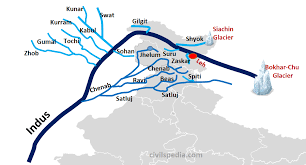
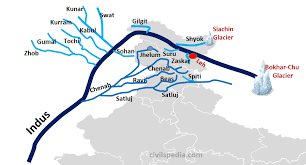
The Indus River spans approximately 3,180 kilometers, making it one of the longest rivers in Asia. Its basin covers over 1,165,000 square kilometers. The primary tributaries include:
- Jhelum River: Originates from Verinag Spring in Jammu & Kashmir.
- Chenab River: Formed by the confluence of Chandra and Bhaga rivers in Himachal Pradesh.
- Ravi River: Originates in Himachal Pradesh.
- Beas River: Originates from Rohtang Pass in Himachal Pradesh.
- Sutlej River: Originates from Rakshastal Lake in Tibet.
Historical Context: Cradle of Ancient Civilizations
 Historical Context: Cradle of Ancient Civilizations
The Indus Valley Civilization, one of the world’s oldest urban cultures, flourished along the banks of the Indus River. Cities like Mohenjo-Daro and Harappa were centers of trade, culture, and governance.
Economic and Agricultural Importance
 Economic and Agricultural Importance
The Indus River System is crucial for agriculture, providing irrigation to vast tracts of land in both India and Pakistan. It supports crops like wheat, rice, and cotton, which are staples in the region’s economy.
Indus Waters Treaty: A Model of Cooperation
 Indus Waters Treaty: A Model of Cooperation
Signed in 1960 between India and Pakistan, the Indus Waters Treaty allocates the waters of the eastern rivers (Sutlej, Beas, and Ravi) to India and the western rivers (Indus, Jhelum, and Chenab) to Pakistan. This treaty has withstood various geopolitical tensions, serving as a model for transboundary water-sharing agreements.
Why This News is Important
 Why This News is Important
 Relevance to Competitive Exams
 Relevance to Competitive Exams
Understanding the Indus River System is vital for aspirants of UPSC, State PSCs, SSC, Banking, Railways, and Defence exams. Questions related to geography, international relations, and environmental studies often feature topics on river systems and water treaties.
Geopolitical Significance
The Indus Waters Treaty is a cornerstone in India-Pakistan relations. Recent developments, such as India’s suspension of the treaty in April 2025 following security concerns, highlight the river system’s role in regional diplomacy and security.
Historical Context: Evolution of the Indus River System
 Historical Context: Evolution of the Indus River System
The Indus River has been central to the development of civilizations in South Asia. From the ancient Indus Valley Civilization to modern-day economies, the river has facilitated agriculture, trade, and cultural exchanges. The 1960 Indus Waters Treaty further underscores its importance in fostering cooperation between India and Pakistan.
Key Takeaways from “Indus River System: Lifeline of Civilizations and Economies”
 Key Takeaways from “Indus River System: Lifeline of Civilizations and Economies”
 A) FAQs: Frequently Asked Questions
 A) FAQs: Frequently Asked Questions
Q1. What is the origin of the Indus River?
The Indus River originates from the Tibetan Plateau near Lake Mansarovar.
Q2. Which countries does the Indus River flow through?
The river flows through China (Tibet), India, and Pakistan.
Q3. What is the significance of the Indus Waters Treaty?
Signed in 1960, it allocates river waters between India and Pakistan, ensuring water-sharing cooperation.
Q4. Why is the Indus River important for agriculture?
It provides essential irrigation for crops like wheat and rice in the region.
Q5. What are the main tributaries of the Indus River?
Jhelum, Chenab, Ravi, Beas, and Sutlej.
Some Important Current Affairs Links